


skip to main content

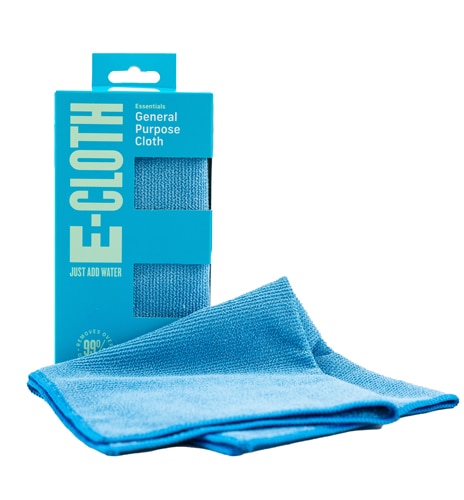
E-Cloth Cleaning Cloth General Purpose -- 1 Cloth


E-Cloth Cleaning Cloth General Purpose
  • Our price: $6.29

$6.29

Out of stock
+ Add to My List

Add to a list


or

Create a List

1 item added to your list

E-Cloth Cleaning Cloth General Purpose -- 1 Cloth

Oops! Something went wrong and we were unable to process your request. Please try again.

Shop similar products Shop all >

E-Cloth Cleaning Cloth General Purpose Description

  • Tackles Any Surface And Task
  • Erases Grease, Grime & Smudges
  • Toss in the Laundry, Not a Landfill
  • Powered By Masses of Microfibers
  • Simplify Home Cleaning
  • 80% Polyester, 20% Polyamide
  • Dimensions: 12.5in x 12.5in
  • Country of Origin: Indonesia, Vietnam

Always up for some good clean fun, the E-Cloth General Purpose Cloth tackles nearly every household cleaning task on your list. Masses of precision-engineered microfibers attract and trap grease, grime, fingerprints, and over 99% of bacteria using the cleaning power of water. Use it on countertops, tile, appliances, even glass. Just dampen and wipe. With so many grab-and-go uses, this cloth will be a constant companion. And without cleaning fluids to lug and spray, you’ll speed through chores – and avoid elements that could linger in air and on surfaces and travel down drains. Rinse and dry between tasks. Toss in the laundry – not a landfill – to refresh. Reusable and backed by our 1-year or 100-wash promise, this cloth helps you cut down on waste and cost, and still clean fresh.


Throw in the laundry, not the landfill

Unlike disposable, one-time use cleaning products, our products are washable and reusable, so you can throw them in the laundry, and keep more money in your pocket.


The General Purpose Cloth is for all general cleaning. It removes thick grease, grime and bacteria from all hard surfaces, using just water.


Why use e-cloth:

Save time - just add water and clean.

Save Money - reduce the use of household cleaning chemicals and paper towels by up to 90%.

Guaranteed 300 washes.

Better Results - a sparkling smear free finish, using just water.

Kind to your family and the environment


e-cloth and your Health:

Cleaning chemicals can be harmful to your health and damage the environment. Using e-cloths with just water can reduce health risks to your family, especially those who may suffer from allergies, asthma and chemical sensitivities.


How e-cloths work:

e-cloths have 1.6 million fibers per square inch. By combining e-cloth's unique fiber technology with water they break up and hold grease, grime and bacteria, which normal cloths leave behind.


Directions

How to Use:

- The General Purpose Cloth, used damp, cleans thick grease, grime and bacteria from all hard surfaces with a wipe.

- Use dry for dusting.


Tip: Use the Glass & Polishing Cloth after the General Purpose Cloth for the perfect finish on shiny surfaces.


Care Instructions 


Daily: Rinse and wring out your General Purpose Cloth after use.

Weekly: Machine wash up to 90°C (hot) with a small amount of detergent. No bleach, fabric softener or dryer sheets. Tumble or hang dry.

As often as you like: To clean and degrease your cloth, boil in just water.

Oops! Instructions: If fabric softener or dryer sheets are used by accident, rewash with a little detergent on the highest temperature setting.

Made to last: This General Purpose Cloth comes with a 1-year or 100-wash promise (when used and cared for as recommended).

*These statements have not been evaluated by the Food and Drug Administration. This product is not intended to diagnose, treat, cure, or prevent any disease.

The product you receive may contain additional details or differ from what is shown on this page, or the product may have additional information revealed by partially peeling back the label. We recommend you reference the complete information included with your product before consumption and do not rely solely on the details shown on this page. For more information, please see our full disclaimer.
View printable version Print Page

The E-Waste Crisis: It's Worse Than You Think

[vc_row][vc_column][vc_column_text]Electronic waste is a nightmare. There's no way around it. I know this because I'm married to someone who works in the world of electronic hardware, and his employer constantly has a ridiculous amount of e-waste. E-waste is less of a headache for people like you and me, but that's only because we're not discarding pounds of it every day. Instead, it's maybe a dead toaster every decade or batteries a couple times a year. Still, we want to get rid of all this stuff properly, right? Everyone's few ounces eventually add up to tons when we aggregate it.

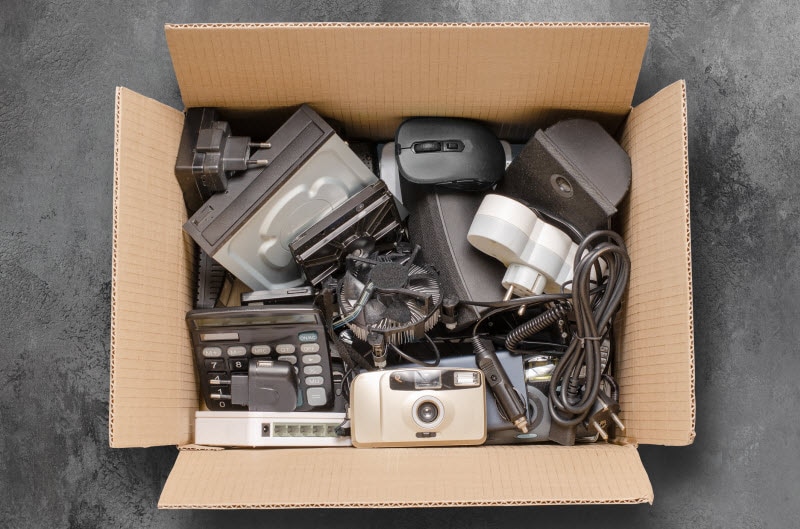
Overhead View of Box Filled With Old Electronics to Represent Concept of What is E-Waste

What is e-waste?

E-waste, electronic waste, e-scrap and end-of-life electronics all generally refer to the same thing: electronics that are no longer useful and — we hope — get recycled or disposed of properly. Unfortunately, lots of e-waste ends up in landfills or along lonely side streets, which really means it’s destined for your body, thanks to leaching and runoff that infiltrate soil and waterways. It's mystifying that people can manage to haul a broken dryer to the edge of a forlorn road and toss it from their truck — but not figure out how to drive the dead appliance to a bona fide recycling hub, which is probably no farther than their illegal dumping spot.

Why is e-waste a problem?

My eyes glaze over when I read statistics, so to spare you the same, here’s one sentence to put all this talk in perspective: E-waste is the world's fastest-growing solid waste stream, according to a 2023 review. One of e-waste's biggest challenges is the fact that one item has multiple components, many of which need to be discarded and/or recycled in different ways. To give you a sense, e-waste can have dozens of different types of metals, some precious, including copper, gold, silver, palladium, aluminum and iron. Many of those can be recycled or don't harm the environment. But e-waste also has toxic heavy metals including lead, mercury and cadmium, as well as polychlorinated biphenyls and brominated flame retardants — things that need to be disposed of properly. E-waste also often has plastic, and different types of plastic at that, some of which has no recycling market. Or e-waste has ceramic or rubber. See? Nightmare. The world's worst e-waste offenders are developing countries, which have become dumping grounds for e-waste and lack tough rules to prevent improper disposal. That said, some developed countries, such as Japan, have strict regulations. The good news on the U.S. front is that generally municipal and county recycling locations let you drop off entire spent units, and then they handle everything from there.

Examples of e-waste

If you still aren't clear on what constitutes e-waste, here's a comprehensive list of e-waste items an ordinary person might have or use: refrigerators, freezers, air conditioners, dehumidifiers, heat pumps, oil-containing radiators, other temperature exchange equipment that uses non-aqueous liquids, monitors, televisions, liquid crystal display photo frames, computers (desktop or laptop), keyboards, fluorescent lamps, high-density discharge lamps (including high-pressure sodium lamps and metal halides, low-pressure sodium lamps, light-emitting diodes), washing machines, dryers, dishwashers, toasters, toaster ovens, blenders, electric stoves, electric hot plates, equipment that reproduces sounds and images, printers, photocopiers, photovoltaic solar panels, vacuum cleaners, carpet cleaners, electrical appliances for sewing, lamps, microwave ovens, ventilators, irons, electric ovens, electric kettles, digital clocks, digital watches and watches whose batteries can’t be removed, electric shavers, electric scales, electrical appliances for hair or body care, calculators, radios, digital cameras, image recorders, high-fidelity equipment, electric toys, smoke detectors, heating controllers, thermometers, small power tools, small medical equipment, small monitoring instruments, small devices with photovoltaic solar panels, satellite radios, cell/mobile phones, global positioning systems, calculators, routers, telephones, video game units, cables, connectors, virtual-reality devices, chargers, headphones, electric toothbrushes, speakers, musical instruments with electronic components (keyboards, for example) In short: If it functions electronically or has a battery built into it, it ends up as e-waste.

What to do with e-waste, and other steps you can take

Here are three straightforward ways to help alleviate the world's complex e-waste problem:

1. Check your local recycling locations and rules

I mean, this is easy, right? Take 10 minutes to do some research so you know what can be dropped off where. You pay taxes for government services. Put them to use. Sometimes stores, such as Best Buy, take e-waste items too.

2. Use your cell phone and computer (and other electronic stuff!) for as long as you can

If so many companies weren't excessive profit-seeking jerks none of us would need this tip because our electronic products would last a very long time. Instead, companies release new versions of their products on a regular basis, so, you know, they can make money. Fight back: You need a new cell phone or computer only when your system is too old for security updates (you can increase memory and such without buying a new unit). Old software is usually more risky on an outdated computer than an outdated phone, especially if you mainly use your phone to, well, talk on the phone and not do a bunch of stuff on apps or check your email. Tech columnists can keep you in the know on when to replace what.

3. Use rechargeable batteries

It should be a cinch to recycle batteries, but at least in my town, it's not. You can't put them in a curbside recycling bin, and not every drop-off location accepts them. Your best bet is to buy rechargeable batteries from the same trusted brands you’d buy regular batteries. Using rechargeable batteries means batteries last a heck of a lot longer than ordinary batteries — years and years, even with regular use. It's also a relief to constantly have batteries handy because all you need to do is recharge them when their power runs down.[/vc_column_text][/vc_column][/vc_row][vc_row][vc_column][vc_text_separator title="Featured Products" border_width="2"][vc_row_inner equal_height="yes" content_placement="middle" gap="35"][vc_column_inner width="1/3"][vc_single_image image="189712" img_size="full" alignment="center" onclick="custom_link" img_link_target="_blank" css=".vc_custom_1762297325230{padding-right: 7% !important;padding-left: 7% !important;}" link="https://www.vitacost.com/green-forest-luncheon-napkins-100-recycled"][/vc_column_inner][vc_column_inner width="1/3"][vc_single_image image="189713" img_size="full" alignment="center" onclick="custom_link" img_link_target="_blank" css=".vc_custom_1762297355370{padding-right: 7% !important;padding-left: 7% !important;}" link="https://www.vitacost.com/vitacost-the-clean-collection-paper-towels-bamboo-2-ply-80-sheet-roll"][/vc_column_inner][vc_column_inner width="1/3"][vc_single_image image="189711" img_size="full" alignment="center" onclick="custom_link" img_link_target="_blank" css=".vc_custom_1762297372833{padding-right: 7% !important;padding-left: 7% !important;}" link="https://www.vitacost.com/e-cloth-cleaning-cloth-general-purpose"][/vc_column_inner][/vc_row_inner][/vc_column][/vc_row]
Please enter a valid zip code
FLDC4