



If you feel a little jittery -- or notice that family and friends are on edge -- you're not alone.
Americans are feeling a lot more stressed-out these days. In fact, American stress levels are rising for the first time in a decade, according to a recently released study by the American Psychological Association.
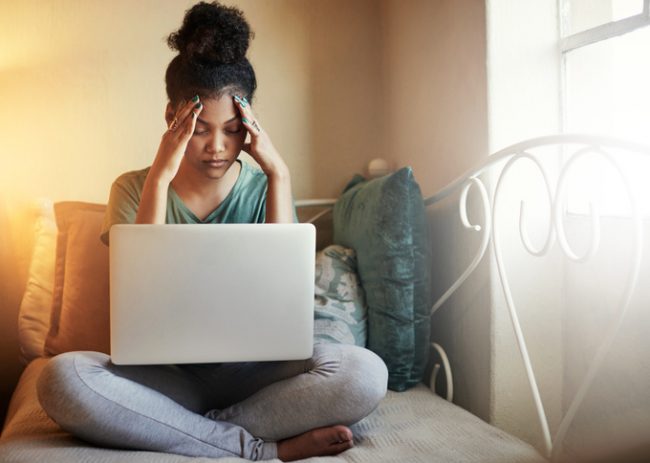
Perhaps not surprisingly, the study found that the divisive 2016 election and its aftermath have triggered a tidal wave of anxiety.
A majority of Americans – 57 percent – say the political climate today stresses them out. Such anxiety is no surprise to Daniel Kirsch, president of The American Institute of Stress.
"One factor that leads to symptoms of distress is not being in control," he says. "Politically, we are so divided that half the people feel they are not in control."
The APA survey found that two-thirds of Americans worry about the nation's future. Other major sources of stress are:
- Fear of terrorist attack: 59 percent
- Worries about police violence toward minorities: 44 percent
- Concerns over personal safety: 34 percent
These stressful feelings are taking their toll, with 80 percent of Americans saying they have experienced at least one health problem linked to the stress they feel.
"The world is a scary place these days to anyone who stays informed," Kirsch says.
Tips for reducing your stress levels
But before you slip under the bed and curl up into a little ball, know that you have tremendous power to reduce the stress you feel.
Kirsch says that too often, people mistakenly assume that stress is something that happens to them, rather than something that happens in them. The distinction is crucial.
"Stress is our reaction to external or internal stressors, including our thoughts," he says. "We are in charge of our stress, and have the ability to control how external stressors affect us."
April is Stress Awareness Month. In honor of that fact, we have some suggestions for reducing your stress levels. They include:
Learn to respect – and accept – the viewpoints of others. Modern life is rife with argument. Even families argue amongst themselves, especially if teens are part of the household, Kirsch says.
"People just don't seem to respect opposing points of view anymore," he says. But Kirsch adds that this attitude is counterproductive, and leads to more stress.
"People are not 'deplorable' if they have a different way at seeing things," he says. "That is what makes life interesting -- as long as we don't fight over our differences."
Take time to relax. A 2014 study out of Carnegie Mellon University found that after just three 25-minute meditation sessions, participants reported feeling significantly less stressed.
If you don't have the time or desire to learn to meditate, employ simpler measures. "Take time to do a few deep breaths throughout the day," Kirsch says.
Get enough activity. Exercise also has been shown to reduce stress levels. It releases endorphins that act as natural painkillers and boost your mood, according to the Anxiety and Depression Association of America.
Endorphin release also helps you sleep, which further reduces stress, the ADAA says.
Choose the form of activity you enjoy most. "Any type will do, but Tai Chi and yoga are best," Kirsch says.
Eat better foods. Kirsch says eating foods that are gentler on the stomach and drinking mainly water can help prevent physical problems that lead to another form of stress. "Digestive stress is all too common in modern times," he says.
Go unplugged. Today's hyper-plugged-in world is a major source of stress, Kirsch says. So power down from time to time. "To charge a phone, you have to plug it in," he says. "Ironically, to charge a brain, you have to unplug it."
