



skip to main content

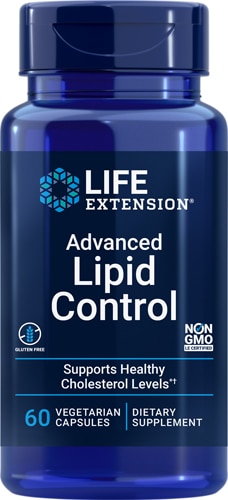
Life Extension Advanced Lipid Control -- 60 Vegetarian Capsules


Life Extension Advanced Lipid Control
  • Our price: $22.50

    $0.75 per serving

  • +

Added to My List as a guest.

Your guest list will be saved temporarily during your shopping session.

Sign in to add items to your saved list(s).

1 item added to your list

Life Extension Advanced Lipid Control -- 60 Vegetarian Capsules

Oops! Something went wrong and we were unable to process your request. Please try again.

  • Guaranteed Authentic

    100% Authentic

    • ✓ Products sourced directly from brands or authorized distributors
    • ✓ No third-party resellers
    • ✓ Products stored and shipped in conditions that ensure quality
    • ✓ Vitacost is 100% committed to your well-being and safety

Life Extension Advanced Lipid Control Description

  • Heart health on your mind? Start by doing your part to maintain already-healthy cholesterol levels with Advanced Lipid Control.
  • This formula delivers 500 mg of amla Indian gooseberry extract in every dose. Researchers have studied amla fruit extract because it contains tannins shown to help maintain cholesterol and triglyceride levels already within normal range.
  • Plus, amla helps encourage a healthy inflammatory response to support heart health and promotes healthy endothelial function by fighting oxidative stress in your cardiovascular system.
  • Every bottle contains 60 gluten-free, vegetarian capsules—enough for one month’s supply. Non-GMO.

Each dose of Advanced Lipid Control contains 500 mg Capros® amla, an extract of Indian gooseberry. This standardized extract contains tannins that have been shown to promote healthy endothelial function, support a healthy inflammatory response, fight oxidative stress, and help maintain healthy levels of all three key blood lipids—LDL, high-density lipoprotein (HDL), and triglycerides—as well as C-reactive protein.


  • Helps maintain already-healthy cholesterol—Amla, an extract of Indian gooseberry, contains tannin compounds that have been clinically studied to help maintain already-healthy cholesterol and triglyceride levels, as well as C-reactive protein.
  • Supports multiple factors for heart health—Maintaining cholesterol levels already within the normal range is just one factor when it comes to heart health. Amla extract has also been shown to help inhibit inflammation to support cardiovascular health
  • Helps inhibit cardiovascular oxidative stress—Amla Indian gooseberry extract has also been studied for its ability to help inhibit oxidative stress, a key part of maintaining a healthy endothelium—the delicate inner lining of your arteries and veins.
  • Ingredients matter – We use only the finest raw ingredients with the purity and potency you deserve. The majority of our products are non-GMO, gluten-free and manufactured in the USA—and a Certificate of Analysis is available for every one.?
  • Live your healthiest life - For over 40 years, we’ve been developing advanced, effective formulas made with the highest standards and based on the latest scientific findings. We believe the answers to a healthier, richer life are within reach, and that rigorous scientific research is the path to get us there. That’s why so many of our nutritional formulas are designed using specific ingredients and amounts based on scientific studies.


Directions

Take one (1) capsule twice daily, or as recommended by a healthcare practitioner.

Free Of
GMOs, gluten.

*These statements have not been evaluated by the Food and Drug Administration. This product is not intended to diagnose, treat, cure, or prevent any disease.


Supplement Facts
Serving Size: 2 Vegetarian Capsules
Servings per Container: 30
Amount Per Serving% Daily Value
Capros® amla extract (fruit)
[std. to 60% low molecular weight hydrolyzable tannins]
500 mg*
*Daily value not established.
Other Ingredients: Vegetable cellulose (capsule), microcrystaline cellulose, maltodextrin, silica, vegetable stearate.
Warnings

Do not exceed recommended dose. When using nutritional supplements, please consult with your physician if you are undergoing treatment for a medical condition or if you are pregnant or lactating.

The product you receive may contain additional details or differ from what is shown on this page, or the product may have additional information revealed by partially peeling back the label. We recommend you reference the complete information included with your product before consumption and do not rely solely on the details shown on this page. For more information, please see our full disclaimer.
View printable version Print Page

The Lowdown on Lipid Panels: A Guide to Understanding Your Bloodwork

[vc_row][vc_column][vc_column_text]If you schedule an annual physical or another type of checkup, there is a good chance your physician will suggest a lipid panel blood test. This test reveals your cholesterol and triglyceride levels. It helps the doctor decide whether you need medications or lifestyle changes to reduce your risk of serious health problems such as heart disease and stroke. "If you care about long-term health, you can’t ignore your lipids," says Dr. Asim Cheema, an internal medicine and cardiology physician and director, structural heart at Southlake Regional Health Centre in Newmarket, Ontario.

Woman Curious About What's a Lipid Panel Looking at Paperwork While Checking Information on Her Laptop

What's a lipid panel?

Typically, a lipid panel measures all of the following:
  • Low-density lipoprotein (LDL) cholesterol. Often referred to as “bad cholesterol,” it builds up inside blood vessels and puts your heart's health at risk.
  • High-density lipoprotein (HDL) cholesterol. This so-called "good cholesterol" helps to keep LDL cholesterol at bay.
  • Very low-density lipoprotein (VLDL) cholesterol. The foods you have eaten recently contribute to this type of cholesterol.
  • Total cholesterol. The reading that combines all of your cholesterol levels into a single score.
  • Triglycerides. The foods you consume introduce this type of fat into your body, and high amounts can contribute to problems affecting the heart and other organs.
Cheema says a lipid blood panel provides important information about a patient’s health. "It’s an underused diagnostic that tells us how your body's really handling the world you're living in," he says.

Why does your doctor request a lipid panel blood test?

The information gleaned from a lipid panel blood test helps a doctor decide if you are at high risk for specific negative health outcomes. “I view lipid panels as one of the most valuable routine tests we can offer,” Cheema says. “They don’t just assess heart risk — they reveal patterns that impact diabetes, liver health, and overall metabolic stability.” Cheema says he uses lipid panels as a window into his patients’ overall state of health. “A lipid panel gives you a baseline to work from, a benchmark to monitor progress and a warning system when things start to slip,” he says. Armed with the insights that come from a lipid blood panel, a  physician can decide if any treatment is necessary to lower your risk of disease and other adverse health outcomes, says Dr. Kezia Joy, a physician at Welzo, a health care platform in the UK. “Early detection of abnormal levels gives patients and doctors a chance to address the problem — whether with lifestyle changes or drugs — to lower the chances of a heart attack, stroke and other complications tied to high cholesterol,” she says. For example, if your LDL or triglyceride levels are elevated, your doctor might prescribe a medication to bring these numbers back down to earth. A doctor might also suggest other changes, such as a switch to a more healthful diet or a regimen of regular exercise. The results of a lipid panel blood test might help a doctor diagnose underlying conditions such as kidney disease that can impact your readings. Testing also helps doctors evaluate the efficacy of treatments in patients already diagnosed with lipid disorders, Joy says.

Who should consider having a lipid panel?

Older patients and those with a history of specific health conditions are especially likely to benefit from lipid panels, Cheema says. “They’re most useful for individuals with a family history of heart disease, those over 40, people managing diabetes or hypertension, or anyone starting a new lifestyle or statin therapy,” he says. Cheema also recommends them for younger patients who have: Lipid panels can help reveal health issues that need to be addressed quickly. “Prevention works best when started early,” Cheema says. Joy also advocates periodic lipid blood panel testing. “A lipid panel is a relatively simple blood test that can offer a lot of information about the heart health of an individual,” she says. Joy says current guidelines generally recommend that adults 20 and older get a cholesterol check every four to six years. Guidelines differ from organization to organization, however. The  U.S. Preventive Services Task Force and National Heart, Lung, and Blood Institute (NHLBI) recommend lipid testing every five years. Meanwhile, the American Heart Association and Centers for Disease Control and Prevention both suggest lipid testing every four to six years. “People who are overweight, diabetic, hypertensive or are obese may have to be tested more often, as well as those with a family history of heart disease or who smoke,” she says. Patients receiving lipid-lowering therapy should have periodic lipid tests to assess their response to therapy. If you are going to have a lipid panel, know that a recent meal can impact your results,” Joy says. “Often, a fast of nine to 12 hours before testing is required to ensure accuracy.”

What are the drawbacks or limitations of a lipid panel?

Joy notes that lipid panels may not reveal all of the potential health threats that a patient faces. For instance, they do not measure inflammation or the buildup of plaque in their arteries. “Although lipid panels are a key smoking gun that inform other tests, they don’t paint a complete picture of a person’s cardiovascular health,” she says. Cheema agrees that lipid panels must be combined with other tests and examination techniques. “The main limitation is that it can’t assess plaque directly, and results might look normal even when risk exists — especially in inflammatory or genetic cases,” Cheema says. For that reason, he combines lipid panels with thorough patient histories and, when needed, additional testing. Vitacost-Life Extension Lab Testing Services

Vitacost has partnered with Life Extension to offer a variety of lab testing services at 25% off.

Click here to learn more. 

[/vc_column_text][/vc_column][/vc_row][vc_row][vc_column][vc_text_separator title="Featured Products" border_width="2"][vc_row_inner equal_height="yes" content_placement="middle" gap="35"][vc_column_inner width="1/3"][vc_single_image image="184761" img_size="full" alignment="center" onclick="custom_link" img_link_target="_blank" css=".vc_custom_1747336644745{padding-right: 7% !important;padding-left: 7% !important;}" link="https://www.vitacost.com/zahler-choleststall-advanced-cholesterol-formula"][/vc_column_inner][vc_column_inner width="1/3"][vc_single_image image="184760" img_size="full" alignment="center" onclick="custom_link" img_link_target="_blank" css=".vc_custom_1747336668507{padding-right: 7% !important;padding-left: 7% !important;}" link="https://www.vitacost.com/life-extension-advanced-lipid-control-60-vegetarian-capsules-1"][/vc_column_inner][vc_column_inner width="1/3"][vc_single_image image="184762" img_size="full" alignment="center" onclick="custom_link" img_link_target="_blank" css=".vc_custom_1747336691897{padding-right: 7% !important;padding-left: 7% !important;}" link="https://www.vitacost.com/terry-naturally-cholestcaps-60-capsules"][/vc_column_inner][/vc_row_inner][/vc_column][/vc_row]
Please enter a valid zip code
FLDC15