


skip to main content

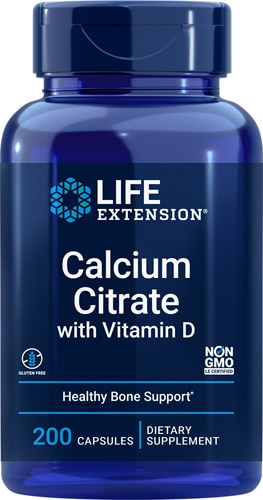
Life Extension Calcium Citrate with Vitamin D -- 200 Capsules


Life Extension Calcium Citrate with Vitamin D
  • Our price: $21.00

    $0.11 per serving

  • +

Added to My List as a guest.

Your guest list will be saved temporarily during your shopping session.

Sign in to add items to your saved list(s).

1 item added to your list

Life Extension Calcium Citrate with Vitamin D -- 200 Capsules

Oops! Something went wrong and we were unable to process your request. Please try again.

  • Guaranteed Authentic

    100% Authentic

    • ✓ Products sourced directly from brands or authorized distributors
    • ✓ No third-party resellers
    • ✓ Products stored and shipped in conditions that ensure quality
    • ✓ Vitacost is 100% committed to your well-being and safety

Life Extension Calcium Citrate with Vitamin D Description

  • Calcium Citrate with Vitamin D is a Novel Formula for Bone Health
  • It Contains a Highly Absorbable Blend of Calcium Citrate and Vitamin D3 to Support Healthy Bone Density and Bone Strength
  • Calcium Citrate with Vitamin D Contains 200 Gluten-Free Capsules, Enough for a 50- to 200-Day Supply
  • This Formula is Made with 100% Non-GMO Ingredients

Calcium is the most abundant mineral in the body and is primarily found in the bones and teeth. In bone formation, calcium forms crystals that provide strength to maturing bone.


For more than bones
Calcium supports more than just healthy bones. It’s also important for muscle contraction, blood vessel contraction and expansion, secretion of hormones and enzymes, and sending messages through the nervous system. A meta-analysis of 40 clinical trials demonstrated a significant impact on already-healthy blood pressure as a result of increased calcium intake by an average 1,200 mg/day.In addition, scientific research suggests that increased intake of calcium may help maintain healthy weight.


Calcium is an essential mineral that is often inadequately supplied, inefficiently absorbed or excreted faster than it is assimilated.The citrate salt of calcium has been shown to be well absorbed and utilized by the body.This is the form many doctors and nutritionists recommend.


Calcium citrate dissolves easily, even if one doesn’t have ample stomach acid. As many people naturally produce less acid as they age, calcium citrate is a good choice for older adults. The addition of vitamin D3 encourages calcium absorption and promotes healthy bone density. However, as people age, they often lose the ability to make vitamin D3.


• Not Everyone Drinks Milk - Maintaining healthy bones with calcium isn’t a new concept, but getting enough can be hard if you don’t drink much milk. Super-absorbable calcium citrate has 200 mg of calcium and 100 IU of vitamin D3 so you don’t have to guess whether you’re getting enough.


• Go Beyond Healthy Bones - Calcium is the most abundant mineral in your body, found primarily in your bones and teeth. But its benefits extend to your whole body. Calcium helps support muscle contraction, blood vessel health, involved in sending messages through the nervous system and can help maintain already-healthy blood pressure.


• Why Calcium Citrate? - Calcium citrate dissolves easily, even if you’re older and have trouble with other forms of calcium. We added vitamin D3 because it encourages calcium absorption and promotes healthy bone density. It’s another one of those nutrients that people tend to have less of as they get older.


• Ingredients matter – We use only the finest raw ingredients with the purity and potency you deserve. The majority of our products are non-GMO, gluten-free and manufactured in the USA—and a Certificate of Analysis is available for every one.


• Live your healthiest life - For over 40 years, we’ve been developing advanced, effective formulas made with the highest standards and based on the latest scientific findings. We believe the answers to a healthier, richer life are within reach, and that rigorous scientific research is the path to get us there. That’s why so many of our nutritional formulas are designed using specific ingredients and amounts based on scientific studies.


Directions

Take one (1) capsule, one to four times daily with food, or as recommended by a healthcare practitioner. Scientific studies suggest calcium supplementation in divided doses with food in the morning and evening may yield the best results.

Free Of
GMOs, gluten.

*These statements have not been evaluated by the Food and Drug Administration. This product is not intended to diagnose, treat, cure, or prevent any disease.


Supplement Facts
Serving Size: 1 Capsule
Servings per Container: 200
Amount Per Serving% Daily Value
Vitamin D3 (as cholecalciferol)2.5 mcg13%
Calcium (as calcium citrate)200 mg19%
Other Ingredients: Vegetable cellulose (capsule), stearic acid, vegetable stearate, silica, modified food starch.
Warnings

Keep Out of Reach of Children. Do Not Exceed Recommended Dose. Do not purchase if outer seal is broken or damaged. When using nutritional supplements, please consult with your physician if you are undergoing treatment for a medical condition or if you are pregnant or lactating. To report a serious adverse event or obtain product information, contact 1-866-280-2852.

The product you receive may contain additional details or differ from what is shown on this page, or the product may have additional information revealed by partially peeling back the label. We recommend you reference the complete information included with your product before consumption and do not rely solely on the details shown on this page. For more information, please see our full disclaimer.
View printable version Print Page

How to Detect — and Correct — Nutrient Deficiencies

Plants suffer from nutrient deficiencies, and we often apply compost, fertilizer or mulch to fix these issues. People suffer from nutrient deficiencies, too, but compost, fertilizer and mulch obviously won’t do any good.

“Vitamin deficiency is rampant and at the root of the most common chronic diseases in America,” says Evan Chait, a certified nutritionist in Ramsey, New Jersey.

Woman in Yellow Dress Holding Glass of Milk She's Drinking to Combat Nutrient Deficiencies | Vitacost.com/blog

While it might be obvious that a nutrient deficiency is plaguing a plant, it’s not necessarily as simple to detect a nutrient deficiency in a human.

So, how do you know whether you’re not getting enough of certain nutrients? Here are five nutrients that often aren’t plentiful enough in our diets, and how we can tell that need more of them.

Vitamin B6

If you lack a sufficient amount of vitamin B6, you might develop a rash or other skin problems, including dandruff, as well as scaly patches and red skin around oil parts of the body like the back, chest or face, according to the Academy of Nutrition and Dietetics. A serious B6 deficiency can trigger depression, confusion or seizures, the group says.

With a suspected lack of vitamin B6 or any other nutrient, a medical or nutrition professional can perform tests to help diagnose a deficiency. In addition, health and diet apps can track your eating habits, including whether you’re consuming enough nutrient-rich foods.

What vitamin B6 does: The vitamin aids in brain development and keeps the nervous and immune systems strong, according to the Mayo Clinic.

How to correct vitamin B6 deficiency: Eat more foods rich in vitamin B6, such as poultry, potatoes, chickpeas and bananas, the Mayo Clinic suggests. Vitamin B6 supplements, in the form of capsules, tablets or liquids, can be added to your diet, too.

Iron

How do you know you're getting enough iron? Symptoms of iron deficiency include fatigue, dizziness, weakness, headaches, pale skin, and cold hands and feet, according to the Academy of Nutrition and Dietetics and the Mayo Clinic. Another sign: Unusual cravings for non-food items such as ice.

What iron does: Iron is a mineral needed to produce red blood cells, the Mayo Clinic says. Red blood cells are critical to maintaining good health.

How to correct iron deficiency: Step up the amount of lean red meat, poultry and seafood that you eat. If you’re a vegan or vegetarian, ramp up your consumption of lentils, beans, spinach or iron-fortified cereals, the Academy of Nutrition and Dietetics recommends. In addition, you can add an iron supplement to your daily health regimen.

Vitamin D

Bone pain, muscle weakness and more infections are among the symptoms of vitamin D deficiency, according to the Academy of Nutrition and Dietetics.

What vitamin D does: Vitamin D is key to building and maintaining healthy bones, the Mayo Clinic says. Why? Because calcium, the main component of our bones, can be absorbed by the body only when vitamin D is hanging around.

How to correct vitamin D deficiency: Include more fortified dairy products, fortified orange juice, and fatty fish like salmon, sardines and mackerels in your diet, the Academy of Nutrition and Dietetics and the Mayo Clinic recommend. Oh, and soak up some sun to help your skin naturally produce vitamin D, but don’t forget to apply sunscreen.

Additionally, you can take vitamin D supplements, but keep in mind that consuming too much vitamin D might trigger an array of health problems.

Vitamin C

A lack of vitamin C can cause bleeding gums, bruising and slow-healing wounds, the Academy of Nutrition and Dietetics says.

What vitamin C does: Vitamin C is a workhorse. Aside from helping form blood vessels, cartilage, muscle and bone collagen, vitamin C promotes healing and protects your body from free radicals, which might be connected to cancer, heart disease and other diseases, the Mayo Clinic says.

How to correct vitamin C deficiency: Increase your consumption of fruits like berries, oranges, pineapple, lemons, limes, guava, papaya and kiwi, and your consumption of vegetables like bell peppers, broccoli, Brussels sprouts, cabbage, potatoes and spinach, according to the Academy of Nutrition and Dietetics and the Mayo Clinic.

Of course, you also can supplement your diet with vitamin C by taking capsules or chewable tablets, the Mayo Clinic says.

Vitamin B12

Among the health issues that can stem from vitamin B12 deficiency are anemia, fatigue, disturbed mood, intestinal problems, muscle weakness and nerve damage, the Mayo Clinic says.

What vitamin B12 does: Vitamin B12 is a jack (or jane) of all trades. It assists with formation of red blood cells, nerve function, DNA production and cell metabolism, according to the Mayo Clinic.

How to correct vitamin B12 deficiency: Vitamin B12 deficiency is, in most cases, rare. That’s because our bodies can store a multiyear supply of it, the Mayo Clinic says.

However, if you’re a vegan or vegetarian, you could be more susceptible to vitamin B12 deficiency, since plants don’t contain vitamin B12. As such, you might need to take oral supplements, or turn to vitamin B12 injections or nasal sprays.

Please enter a valid zip code
FLDC15