[vc_row][vc_column][vc_column_text]During the
pandemic, millions of Americans relied on at-home medical tests to detect COVID-19. Thanks in part to this wave of COVID testing, the popularity of at-home medical testing has soared. In fact, one report predicts the global market for at-home testing will grow from $11.4 billion in 2024 to $19.4 billion by 2032.
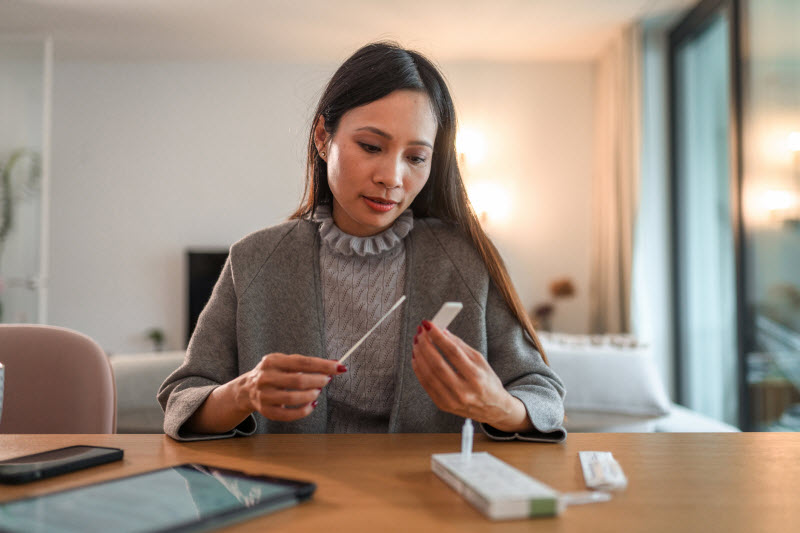
As more people in the U.S. and elsewhere embrace at-home health tests for a number of conditions, a couple of questions arise: How reliable are these tests, and how much trust can you put in the test results?
“At-home medical tests can provide helpful information, but they are not a replacement for guidance and treatments by a health care provider. After at-home testing, you should follow up with your provider regardless of the result,”
advises the National Library of Medicine.
A
2022 survey by the University of Michigan’s Institute for Healthcare Policy and Innovation found that just 55% of Americans had shared results of at-home tests for conditions like HIV and urinary tract infections with a primary care provider. But 90% who had purchased and used at-home cancer tests had shared the results.
One reason to share results: The quality of at-home medical tests “can vary dramatically,” according to
Consumer Reports.
What are at-home health tests?
The medical library explains that at-home medical tests are kits you can buy at places like pharmacies and grocery stores. These kits enable you to test for, screen or monitor certain conditions at home, without visiting a medical facility.
Among these tests are:
- COVID tests
- Hepatitis tests
- HIV tests
- Pregnancy tests
- Blood sugar tests for diabetes management
- Colon cancer screening tests
- Cholesterol tests
- Tests for urinary tract infections
- Genetic tests that indicate whether you’re at risk for certain diseases
If you take a genetic test to determine disease risk, be sure to visit with your health care provider afterward, the medical library advises.
“These tests can’t diagnose diseases and are not as accurate as traditional lab-based genetic tests. But if a home test shows you may be at higher risk, your provider can monitor your health more closely,” says the medical library.
How do at-home health tests work?
In many cases, you can obtain an at-home health test without a prescription. Most test kits involve taking a sample of a bodily fluid, such as blood, urine, saliva or mucus, and testing the sample as direc
“Some tests provide immediate results,” the medical library says, “while others need to be packaged and mailed to a lab.”
Most tests enable users to call a phone number to pose questions about collecting your test sample or figuring out the test results,
according to the Phoenix-based Banner Health system.
How reliable are at-home health tests?
Certain at-home tests may be convenient and affordable, giving patients more options regarding how and when to get medical care, Dr. Jeffrey Kullgren, an associate professor of internal medicine at the University of Michigan School of Public Health, told Consumer Reports.
In fact, some tests can be as reliable as tests administered by health care professionals. Case in point: A
study of 1,000 patients seen during a five-month period in 2022 in Baltimore showed the accuracy of at-home COVID tests was comparable to the accuracy of professionally administered COVID tests.
Still, the overall quality of at-home tests can vary widely. And some might provide confusing results, leading to unnecessary follow-up tests, unwarranted treatments and delayed care, Kullgren says.
As the Banner Health system emphasizes, at-home tests come with a number of drawbacks. These include:
- Picking the wrong test.
- Misunderstanding your test results. This could cause you to try the wrong medication or therapy, or delay diagnosis or treatment.
- Making costly changes. Based on your test results, you might switch your diet to pricier foods, for instance.
- Giving up regular check-ups. You might replace at-home tests with in-office check-ups, which can reveal problems that at-home testing might not pick up.
“Home health tests can be a convenient and private way to test yourself for various health conditions,” Banner Health says. “But before you try one, check to see if your test has been evaluated by the FDA and weigh the pros and cons to make sure you’re making the right choice.”
6 tips for using at-home health tests
When you’re considering at-home medical tests, keep in mind these six tips from the National Library of Medicine, Banner Health and Consumer Reports:
- Check with your health care provider. Ask whether a lab test might offer more dependable results than an at-home test or another diagnostic tool.
- Compare the cost of an at-home test to a lab test available at medical facilities. In some cases, your health insurance might cover a lab test but not an at-home test.
- Use only FDA-approved or FDA-authorized tests. The U.S. Food and Drug Administration (FDA) imposes strict quality and accuracy requirements on at-home tests. The federal agency has approved the marketing of dozens of at-home medical tests.
- Don’t purchase or use expired tests. The effectiveness of chemicals in these tests can decline over time.
- Closely follow test instructions. Even minor adjustments can alter the results of an at-home test.
- Be careful with the test sample. If you don’t properly handle or store a sample, the test results might be inaccurate.
[/vc_column_text][/vc_column][/vc_row][vc_row][vc_column][vc_text_separator title="Featured Products" border_width="2"][vc_row_inner equal_height="yes" content_placement="middle" gap="35"][vc_column_inner width="1/3"][vc_single_image image="177083" img_size="full" alignment="center" onclick="custom_link" img_link_target="_blank" css=".vc_custom_1722980144919{padding-right: 7% !important;padding-left: 7% !important;}" link="https://www.vitacost.com/davinci-laboratories-cholestsure-90-capsules-2"][/vc_column_inner][vc_column_inner width="1/3"][vc_single_image image="177082" img_size="full" alignment="center" onclick="custom_link" img_link_target="_blank" css=".vc_custom_1722980168152{padding-right: 7% !important;padding-left: 7% !important;}" link="https://www.vitacost.com/enzymedica-ph-strips"][/vc_column_inner][vc_column_inner width="1/3"][vc_single_image image="177081" img_size="full" alignment="center" onclick="custom_link" img_link_target="_blank" css=".vc_custom_1722980200721{padding-right: 7% !important;padding-left: 7% !important;}" link="https://www.vitacost.com/phresh-products-strips-ph-test"][/vc_column_inner][/vc_row_inner][/vc_column][/vc_row]