


skip to main content

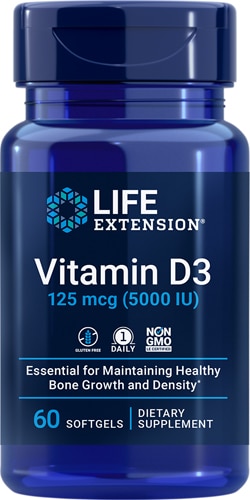
Life Extension Vitamin D3 -- 125 mcg (5000 IU) - 60 Softgels


Life Extension Vitamin D3
  • Our price: $7.50

    $0.13 per serving

  • +

Added to My List as a guest.

Your guest list will be saved temporarily during your shopping session.

Sign in to add items to your saved list(s).

1 item added to your list

Life Extension Vitamin D3 -- 125 mcg (5000 IU) - 60 Softgels

Oops! Something went wrong and we were unable to process your request. Please try again.

  • Guaranteed Authentic

    100% Authentic

    • ✓ Products sourced directly from brands or authorized distributors
    • ✓ No third-party resellers
    • ✓ Products stored and shipped in conditions that ensure quality
    • ✓ Vitacost is 100% committed to your well-being and safety

Life Extension Vitamin D3 Description

  • The “sunshine vitamin,” aka vitamin D is a whole-body health superstar. It’s terrific for supporting bone health, immune and heart health, cognitive performance and so much more. But many of us don’t get enough D3 from sunshine and diet alone (and sunshine shouldn’t be the source of vitamin D).
  • That’s where a high potency vitamin D3 supplement comes in, providing you with enough D3 levels for whole-body wellness.
  • We recommend about 125 mcg (5,000 IU) to 200 mcg (8,000 IU) of daily vitamin D3.
  • This D3 vitamin supplement is ideal to help your body reach optimal vitamin D3 levels.

Your skin produces vitamin D when in direct sunlight, but you should not get your vitamin D from unprotected sun exposure or indoor tanning devices. Supplementing with vitamin D goes a long way towards inhibiting deficiency: we recommend about 5,000 IU–8,000 IU of vitamin D3 a day. If your multivitamin already delivers 1,000–3,000 IU of vitamin D, Vitamin D3 5,000 IU is perfect for achieving optimal vitamin D levels.


Cognitive health

Vitamin D is important for maintaining cognitive health and function as you age. Healthy serum vitamin D levels have been shown to correspond with better scores on cognitive health tests and better maintenance of cognitive ability in aging individuals. 


Bone and immune health

Vitamin D (along with vitamin K and essential minerals) is essential for facilitating the transport of calcium into the bone matrix. This is an important step in maintaining strong, healthy bones and teeth. Vitamin D also plays a critical role in healthy immune function.


Heart health & blood pressure support

Vitamin D helps to regulate the body's calcium balance while facilitating calcium absorption into the bloodstream, promotes a healthy inflammatory response in the cardiovascular system, and encourages healthy endothelial function. Vitamin D also helps inhibit excess renin levels. Healthy renin levels help maintain healthy blood pressure already within the normal range.


Getting enough vitamin D

This vitamin D3 supplement delivers 5,000 IU of vitamin D3 as cholecalciferol per softgel. We suggest that you take a 25-hydroxy vitamin D blood test after 3 months to assess and adjust your dosage. Your optimal blood levels should be 50–80 ng/ml year-round.


  • The “sunshine vitamin”—Your skin makes vitamin D when it’s exposed to sunlight, but that shouldn’t be your only source! So stock up on vitamin D3. We suggest at least 125 mcg (5000 IU) vitamin D3 a day, which makes this formulation perfect for getting enough vitamin D.
  • Bone & brain health—Vitamin D helps get calcium into your bone matrix—the lattice-like structure that gives your bones their strength and rigidity. Vitamin D3 is good for your brain too: healthy D3 levels have been shown to correspond with better cognitive health scores as you age!
  • Immune system & already-healthy blood pressure support—Vitamin D3 plays a critical role in immune function. It also promotes endothelial health and can help maintain already-healthy blood pressure, which makes getting enough daily vitamin D a really, really good idea!
  • Ingredients matter – We use only the finest raw ingredients with the purity and potency you deserve. The majority of our products are non-GMO, gluten-free and manufactured in the USA—and a Certificate of Analysis is available for every one.?
  • Live your healthiest life - For over 40 years, we’ve been developing advanced, effective formulas made with the highest standards and based on the latest scientific findings. We believe the answers to a healthier, richer life are within reach, and that rigorous scientific research is the path to get us there. That’s why so many of our nutritional formulas are designed using specific ingredients and amounts based on scientific studies.


Directions

Take one (1) softgel daily with food, or as recommended by a healthcare practitioner.

Free Of
GMOs, gluten.

*These statements have not been evaluated by the Food and Drug Administration. This product is not intended to diagnose, treat, cure, or prevent any disease.


Supplement Facts
Serving Size: 1 Softgel
Servings per Container: 60
Amount Per Serving% Daily Value
Vitamin D3 (as cholecalciferol)125 mcg625%
Other Ingredients: Extra virgin olive oil, gelatin, medium chain triglycerides, glycerin, purified water, rosemary extract.
Warnings

Do not exceed recommended dose. When using nutritional supplements, please consult with your physician if you are undergoing treatment for a medical condition or if you are pregnant or lactating.


Caution Individuals consuming more than 50 mcg (2000 IU)/day of vitamin D (from diet and supplements) should periodically obtain a serum 25-hydroxy vitamin D measurement. Do not exceed 10000 IU per day unless recommended by your doctor. Vitamin D supplementation is not recommended for individuals with high blood calcium levels.

The product you receive may contain additional details or differ from what is shown on this page, or the product may have additional information revealed by partially peeling back the label. We recommend you reference the complete information included with your product before consumption and do not rely solely on the details shown on this page. For more information, please see our full disclaimer.
View printable version Print Page

5 Ways Cold Weather Can Harm Your Health

Dismal driving conditions, frizzy hair and a higher electricity bill aren’t the only consequences of winter: Chillier weather and darker days can also take a serious toll on your health. Here’s how your well-being takes a hit when the mercury plunges—and what you can do to sustain the vibrancy you feel in balmier temps:

Woman in Cold Weather Walking Dog Along Snow-Covered Field | Vitacost.com/blog

1. The winter blues

The winter blues are far from just a myth: Seasonal Affective Disorder—which, The Mayo Clinic reports, can strike a person during any seasonal change—is most ubiquitous during winter, when the cold weather, shorter days and dearth of sunlight engenders a number of season-specific symptoms, from oversleeping and weight gain to feeling exactly zero excitement for your favorite activities.

The solution? Taking preventative measures—and seeking help, if necessary. “Light therapy has been a mainstay of treatment for SAD since the 1980s,” the National Institute of Mental Health reports. The concept behind the method is to “replace the diminished sunshine of the fall and winter months using daily exposure to bright, artificial light” through the use of a light box. Psychotherapy, specifically Cognitive Behavioral Therapy, has also been demonstrated to provide relief, while exercise in winter operates as a natural mood booster—now and always.

2. Increased risk of heart attack

Reporting back results from a 16-year study that involved more than 280,000 patients,  Science Daily found that heart attacks peak during the winter months. And while the holidays may bring heartbreak for some (particularly those who are isolated from their friends and family), the venerable journal found that this higher incidence was largely due to the drop in temperature—and was largely present in individuals who were predisposed to cardiovascular problems in the first place (chiefly those with diabetes, hypertension and atherosclerosis). “The body responds to cold by constricting superficial blood vessels, which decreases thermal conduction in the skin and subsequently increases arterial blood pressure,” Science Daily reports. “Other responses are shivering and increased heart rate, which raise the metabolic rate and in turn increase body temperature” which “may ultimately trigger a heart attack.”

How to safeguard your heart—no matter if you’re already in good health, physically and romantically? Keep your body moving (your heart is a muscle, after all), manage stress (which tends to spike during the holidays), beware of excess alcohol, get adequate sleep and ensure you know the warning signs of a heart attack.

3. Seasonal bugs

Trekking through the mall in search of the perfect present, taking your outdoor exercises into the gym, even getting together with friends and family for a festive meal can all wreak havoc on your immune system. “During winter months, people spend more time inside and in close contact with each other, such as in stores, malls and restaurants,” Harvard Health reports. “This means that the flu, coughs and colds are more easily spread.”

No need to pull a Grinch until Spring arrives, though. Carry hand sanitizer with you, frequently wash your hands with soap and water, and fill your plate with immunity-enriching foods like oranges, turmeric, ginger, garlic, spinach and almonds.

4. An aching head

It’s not just the impending holidays and their myriad stresses that can cause a headache—blame, too, the nippier temps: One of the causes of headaches is “constriction of blood vessels in the brain,” Xiang Li, MD and internist at Tri-City Medical Center in California, explains. “Cold weather can cause blood vessels to quickly narrow, reducing the flow of blood.” Sun glare, storms and the drop in barometric pressure can also cause chemical imbalances in your brain, resulting in the sudden desire to seek out a painkiller (or a dark, silent room).

Aside from the things you do in the name of health day in and day out—aim for adequate rest, eat a diet rich in fruit, veggies, and lean proteins, exercise often and cope smartly with stress—consider amping up your intake of vitamin D before autumn ends: the sunshine vite might help ward off an achy brain, Health reports. In addition to supplements, you may want to increase your consumption of fatty fish (such as salmon and tuna), eggs (with the yolks!), mushrooms, milk and oatmeal.

5. Frostbite

Numbness, tingling, gray-ish or white skin, a complete loss of sensation—all are signs of frostbite, wherein body tissue literally freezes in response to extremely cold temperatures (and is manifested through the constriction of blood vessels and oxygen to the frozen body parts). WebMD confirms that frostbite typically occurs in places that are farthest from “the body core, and, therefore, have less blood flow:” feet, toes, hands, fingers, nose and ears. Quick treatment relieves the symptoms of superficial frostbite, but “deep” frostbite, its severer cousin, can result in tissue damage and the loss of an appendage. (Your grandma said your fingers are going to fall off from the cold for a reason.)

How to avoid it—or treat it if it happens? First, wear adequate protective clothing and don’t stay in the cold for a prolonged period of time; if you are in the cold when frostbite arrives, find a warm haven immediately. Run the affected part under warm water or wrap it in a blanket, and rehydrate (preferably with something, yes, warm). And shy away from too many of those apres-ski hot toddys: “You are more at risk of developing frostbite if you have had alcohol,” Patient says, “which makes you drowsy or behave differently.” Less aware of “how cold you are and less aware that you are in danger,” the less likely you are to “get out of the cold, or protect yourself from it.” In other words, head for the lodge and nestle in next to the fireplace—snow is just as lovely when seen from a cozy, indoor place.

Please enter a valid zip code
LVDC5