


skip to main content

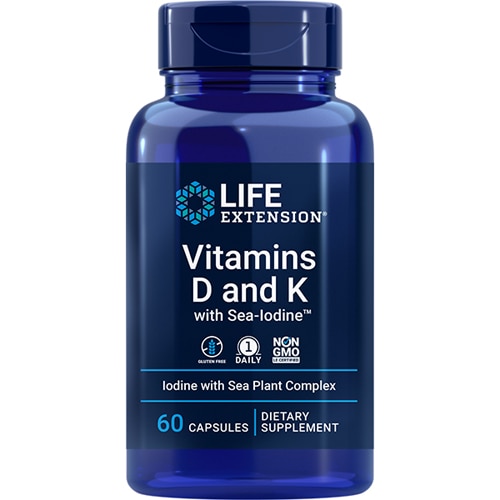
Life Extension Vitamins D and K with Sea-Iodine -- 60 Capsules


Life Extension Vitamins D and K with Sea-Iodine
  • Our price: $18.00

    $0.30 per serving

  • +

Added to My List as a guest.

Your guest list will be saved temporarily during your shopping session.

Sign in to add items to your saved list(s).

1 item added to your list

Life Extension Vitamins D and K with Sea-Iodine -- 60 Capsules

Oops! Something went wrong and we were unable to process your request. Please try again.

  • Guaranteed Authentic

    100% Authentic

    • ✓ Products sourced directly from brands or authorized distributors
    • ✓ No third-party resellers
    • ✓ Products stored and shipped in conditions that ensure quality
    • ✓ Vitacost is 100% committed to your well-being and safety

Life Extension Vitamins D and K with Sea-Iodine Description

  • Looking to Get Enough of the Hard-To-Find Nutrients Vitamin D, Vitamin K, and Iodine? Look No Further
  • We’ve Combined Vitamin D3 with Vitamin K and Iodine for Triple-Action Health Support
  • Vitamin D Supports Immune Health, Healthy Bone Density, Cognitive Health and More
  • Vitamin K Helps Maintain Your Body’s Calcium Balance, and Iodine is Essential for the Production of Thyroid Hormones
  • Get These Vital Nutrients in a Convenient, Once-Daily Supplement

Your skin produces vitamin D when in direct sunlight, but you should not get your vitamin D from unprotected sun exposure or indoor tanning devices because of the potential effects on skin health.


Iodine is a trace element essential for the production of thyroid hormones, and vitamin K is an essential nutrient that promotes both arterial and bone health.


Iodine is essential for thyroid health
Iodine is a trace element necessary for the production of the thyroid hormones triiodothyronine (T3) and thyroxine (T4). Iodine is abundant in seafood and sea vegetables, but not everyone likes or has access to marine foods, and vegan diets sometimes lack adequate iodine.


Commercial salt makers add iodine to table salt to make up for this potential deficiency. However, we now know the health risks of eating too much salt, so health-conscious people may miss out on an easy source of iodine. Vitamins D and K with Sea-Iodine™ delivers 1,000 mcg of iodine to support healthy iodine levels.


Vitamin K1 and two different types of K2
Vitamin K helps inhibit calcium buildup in your arteries while promoting healthy calcium absorption into your bone matrix. K1 is the most common form of vitamin K in the diet, coming primarily from leafy green vegetables—though vitamin K1 isn’t well absorbed from these foods.


Vitamin K2 is found in cheese, eggs and fermented soybeans. It has been shown to be more bioavailable than K1 and to remain active in the body far longer. The MK-4 and MK-7 forms of vitamin K2 also provide important benefits but have different tissue distributions and bioavailability, so it’s important to take both. This formula contains both forms of vitamin K2.


Vitamin D3 for cognitive, bone and immune health
Healthy serum vitamin D levels have been shown to correspond with better cognitive function. Vitamin D, along with vitamin K and essential minerals, is necessary for facilitating the transport of calcium into the bone matrix for strong, healthy bones and teeth.Vitamin D also plays a critical role in healthy immune function.


Some people may need 125 mcg (5,000 IU) to 200 mcg (8,000 IU) of vitamin D3 a day to achieve healthy blood levels of vitamin D. If your multivitamin already delivers 25-75 mcg (1,000–3,000 IU) of vitamin D, adding Vitamins D and K with Sea-Iodine™ may help achieve healthy vitamin D levels.


Vitamin D3 for heart health and blood pressure support
Vitamin D promotes a healthy inflammatory response, supports cardiovascular health and encourages healthy endothelial function. Vitamin D also helps inhibit excess renin levels. Healthy renin levels help maintain healthy blood pressure already within the normal range.


Getting enough vitamins D and K and iodine
This vitamin D3 supplement delivers 125 mcg (5,000 IU) of vitamin D3 as cholecalciferol per capsule. We suggest that you take a 25-hydroxy vitamin D blood test after 3 months to assess and adjust your dosage. Your optimal blood levels should be 50–80 ng/ml year-round.


Ensure you get enough of these three essential nutrients with Vitamins D and K with Sea-Iodine™.


• Supports a healthy immune response—Are you getting enough vitamin D3? We’ve combined several nutrients diets often lack, like vitamin D, which helps maintain a balanced immune system along with other benefits, from bone health to cognitive function


• Helps maintain strong bones—Vitamin D is necessary for bone health because, along with vitamin K, it gets calcium into your bones. Not only that, but we include multiple types of vitamin K in this formula: vitamin K1 as well as two types of vitamin K2.


• Supports thyroid health—There’s one more nutrient some people may lack: iodine. Common in table salt (and missing from many healthy diets), iodine is used to make thyroid hormones. Your thyroid helps regulate your body’s metabolism.


• Ingredients matter - Sourced using only the finest raw ingredients with the quality and purity your body deserves. The majority of our products are non-GMO, gluten-free and manufactured in the USA—and a Certificate of Analysis is available for every product we produce.


• Live your healthiest life – We believe the answers to a healthier life are in reach, and that scientific research is the key to getting there. That’s why so many of our formulas feature specific ingredients and amounts based on scientific studies.


Directions

Take one (1) capsule once daily with food, or as recomended by a healthcare practitioner.

Free Of
Gluten and GMOs.

*These statements have not been evaluated by the Food and Drug Administration. This product is not intended to diagnose, treat, cure, or prevent any disease.


Supplement Facts
Serving Size: 1 Capsule
Servings per Container: 60
Amount Per Serving% Daily Value
Vitamin D3 (as cholecalciferol)125 mcg625%
Vitamin K activity from:2100 mcg1,750%
   Vitamin K1 (as phytonadione)1000 mcg
   Vitamin K2 (as menaquinone-4)1000 mcg
   Vitamin K2 (as trans menaquinone-7)100 mcg
Iodine [from Sea-Iodine™ Complex Blend (organic kelp and bladderwrack extracts, potassium iodide)]1000 nanograms667%
Other Ingredients: Microcrystalline cellulose, vegetable cellulose (capsule), maltodextrin, food starch-modified, dicalcium phosphate, stearic acid, silica.
Warnings

Caution: Individuals consuming more than 50 mcg (2,000 IU)/day of vitamin D (from diet and supplements) should periodically obtain a serum 25-hydroxy vitamin D measurement. Do not exceed 250 mcg per day unless recommended by your doctor. Vitamin D supplementation is not recommended for individuals with high blood calcium levels. If you have a thyroid condition or are taking antithyroid medications, do not use without consulting your healthcare practitioner. If you are taking a vitamin K antagonist (e.g. warfarin), consult your healthcare practitioner before taking this product.


Keep Out of Reach of Children
Do Not Exceed Recommended Dose

Do not purchase if outer seal is broken or damaged.
When using nutritional supplements, please consult with your physician if you are undergoing treatment for a medical condition or if you are pregnant or lactating.

The product you receive may contain additional details or differ from what is shown on this page, or the product may have additional information revealed by partially peeling back the label. We recommend you reference the complete information included with your product before consumption and do not rely solely on the details shown on this page. For more information, please see our full disclaimer.
View printable version Print Page

What Doctors Want You to Know About Vitamin-Level Testing

Everyone has a different definition of what health looks like. To some, a healthy routine might include popping a multivitamin every day. Yet multivitamins aren’t designed to address specific deficiencies that vary widely from person to person. So how do you know what vitamins you actually need? That’s where vitamin-level testing comes in. We spoke with two doctors to learn who it’s best for, how it is done, and why you should (or shouldn't) do it, depending on your current level of health.

Medical Professional Holding Sample From Blood Test for Vitamin Level Testing | Vitacost.com/blog

Who Needs Vitamin-Level Testing

“Most people would benefit from getting vitamin-level testing to establish a personal baseline of different vitamin levels,” says Chirag Shah, MD, a board-certified emergency medicine physician and former director of Accesa Health medical center in Southern California.

Some vitamin imbalances often present themselves with subtle symptoms that might be difficult to identify without actual lab testing, he adds. The most common imbalances include deficiencies of vitamin B12 and vitamin D, as well as iron.

If you have issues with GI absorption—such as Crohns disease or ulcerative colitis—or have had major intestinal surgeries like gastric bypass, vitamin-level testing may be especially useful, says Arielle Levitan, MD, co-founder of VousVitamin and co-author of “The Vitamin Solution.” Vitamin-level testing is done routinely in those kinds of patients, she says.

How Vitamin-Level Testing is Done

Vitamin levels are tested through a blood test at a medical office, which must be ordered by your medical provider and analyzed at a lab. It’s as simple as getting your blood drawn, like you would for any type of test. Results may be available within two to seven days, depending on the test and the location of the processing lab, says Dr. Shah.

The cost of lab testing varies widely depending on your lab and insurance, but in general, it may run roughly $100 per level, says Dr. Levitan.

You don’t have to worry about skipping breakfast the day of your test, either; the results won’t be impacted by your dietary intake that day.

Some companies offer vitamin-level testing online, though the medical community does not recommend this method, as results require physician analysis. It’s also difficult to confirm whether an online company is working with a certified lab.

Reasons to Have Vitamin-Level Testing 

People with persistent issues like thinning hair, fatigue and/or muscle aches despite taking reasonable doses of vitamins may want to consider having a blood test, says Dr. Levitan, to determine whether a deficiency could be causing the symptoms.

Vitamin levels vary due to age and gender, as well as many other factors. For example, iron deficiency is common in women—especially during pregnancy—yet Dr. Levitan says she also sees it in men. Most people have vitamin D deficiency to some extent depending on where they live, as it varies based on your sun exposure (colder, cloudier climates are more prone to vitamin D deficiency). Vitamin B12, another common deficiency, is often seen in people following a vegetarian or vegan diet, and becomes more likely as you age.

Yet just how problematic can a vitamin deficiency be? Perhaps, more than you might expect.

“People get serious symptoms from them,” says Dr. Levitan, noting that certain vitamin deficiencies are linked to many different conditions. A lack of vitamin D, for example, has been linked to osteoporosis, immune issues, diabetes and more diseases, she says; B12 deficiencies are associated with memory issues and other neurological symptoms.

Risks of Vitamin-Level Testing

While there are no physical downsides to having your blood drawn and analyzed in a vitamin-level test, the risk comes with misinterpreting the results. (The process can also get expensive, as previously noted.)

Labs have standard ranges for healthy vitamin levels, but they can vary. “There’s a great deal of confusion around it,” says Dr. Levitan.

For example, some labs may have a range up to 100 for vitamin D, but levels above 50 are associated with many poor outcomes, she says—even though a reading of, say, 70 would appear to fall in the “normal” range. And serum calcium levels, which can be analyzed through a blood test, are not indicative of dietary intake at all, creating further confusion, she says.

That’s why it’s crucial to have a doctor read and analyze your results, says Dr. Shah, to determine what dietary changes you need to make to adjust your levels appropriately.

Another potential downside of vitamin-level testing is that many common vitamins that are typically supplemented—such as vitamin A or vitamin B6—won’t show up on a test, says Dr. Levitan. “There are only a limited number of vitamins we can test for with utility,” she notes.

The Bottom Line on Vitamin Testing

If you’re feeling overwhelmed about vitamins, you’re not alone.

“A lot of people are very confused about vitamins, taking way too many or perhaps the wrong ones, which can be dangerous,” says Dr. Levitan. In theory, while you could design an ideal diet to get every vitamin your body needs to function at an optimum level, that’s very rare in reality, she says, as some—like vitamin D—are very difficult to obtain via diet.

Talking with your doctor is the best way to begin identifying potential vitamin deficiencies you may have. Based on a conversation about your diet and lifestyle, and analysis of any symptoms you’re experiencing, he or she should be able to determine what vitamins you’re lacking without running a vitamin-level blood test.

Think of vitamin-level testing as an escalated approach to discovering a potential vitamin deficiency linked to a greater issue, if you and your doctor cannot determine what might be causing your symptoms.

Please enter a valid zip code
FLDC9