[vc_row][vc_column][vc_column_text]There’s a lot involved when it comes to feeding children. And if you’re caring for a baby, you may have heard mixed information about both when and what foods to introduce when your baby is ready to try out solids.
Foods that are common allergens — like peanuts, egg and soy — can be amongst the most intimidating foods to introduce, out of fear that the child will develop an allergic reaction to it. This can make some parents and caregivers initially avoid these foods. Yet doing so can come at a big cost.
Research on early allergen introduction has been rapidly developing and is worth finding out more about to guide your child's feeding journey and to ultimately benefit their health. So, here’s what you need to know about introducing allergens early for your child.
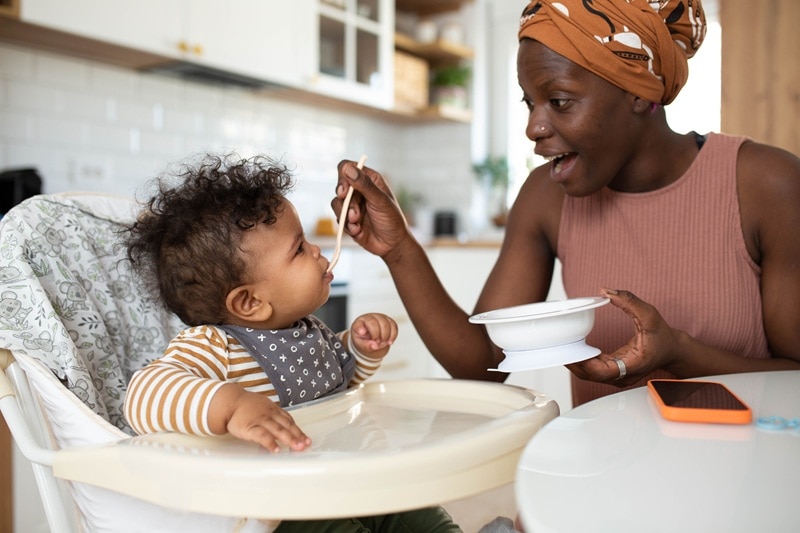
How to Introduce Allergens to Baby
When are babies ready for solid food?
According to the
American Academy of Pediatrics (AAP), babies get all the nutrition they need from either breastmilk and/or formula for the first 6 months of life. Around this time is when they are ready to begin transitioning to eating “solid foods” — or those that are thicker in texture such as purees or soft solids.
Signs and symptoms a baby is ready for solid food may include:
- Ability to hold their head up on their own
- Able to sit up either alone or with support
- They open their mouth when you offer food
- They attempt to grab small items like toys or food
- They frequently bring objects to their mouth
- They demonstrate the ability to swallow by moving food from the back of their tongue into their throat
Babies can be ready for solid foods as early as 4 months old. At that age, the goal is more for exposure to different food components as well as practice with proper swallowing, and not necessarily to provide actual nutrition. Note that it is
not recommended to introduce solid foods to babies younger than 4 months of age.
What causes food allergies in babies?
According to the
National Institute of Allergy and Infectious Diseases, food allergies develop when a person’s immune system identifies a food — or substance in a food — as a danger and sets off a protective response. This may trigger a series of events in the body that may lead to mild to severe symptoms such as:
- Vomiting
- Hives
- Cough
- Swollen tongue
- Shortness of breath
An allergic reaction often occurs within minutes to two hours after being exposed to the food, and can occur as a result of eating, inhaling or even just touching the food.
Some people’s immune systems overreact to certain food particles, which is why food allergies vary from person to person, and why some people have no food allergies at all.
When to introduce allergens to babies
Contrary to old advice given by health professionals, there is no evidence that delaying introduction of commonly allergenic foods like egg, peanut and dairy prevents food allergies in children. The advice to wait to introduce high allergen foods was based more on expert opinion at the time, and not solid evidence. Yet in 2008, the AAP acknowledged the lack of convincing evidence that delaying giving such foods to infants could prevent food allergy. In 2015, a
ground-breaking study on peanut allergies led to a complete reversal of the old advice.
In fact, current research now shows that introducing high allergen foods early — between
4 to 11 months old — helps prevent the development of a food allergy. This may be because early introduction can help train the child’s rapidly developing immune system to accept the food, rather than responding negatively. What’s more,
researchers have found that using the new advice of early introduction has helped reduce the prevalence of peanut allergies by 43% between 2015 and 2017, and a 36% reduction in any other food allergy during the same time frame. So, this new guidance is significant.
How to introduce allergens to babies
As is the case for all food introductions, you should start small with common allergen foods as well. This includes foods that contain the top 9 allergens, which are:
- Milk
- Eggs
- Fish
- Shellfish
- Tree nuts
- Peanuts
- Wheat
- Soybeans
- Sesame
This may look like introducing one allergen at a time, and waiting at least a day before trying out a new allergen — monitoring for symptoms along the way. Start with a small taste, and gradually increase the quantity as tolerated.
Thankfully, many food brands on the market are also here for support.
Here are examples of 3 companies striving to making early allergen introduction easier:
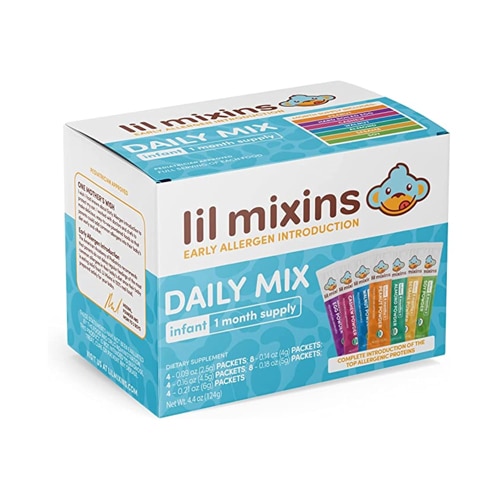
Lil Mixins offers convenient and easy-to-use powders that can be mixed into foods like yogurt, oatmeal and any purees. Each powder packet provides isolated proteins from 7 of the most common allergens, making it easy to keep track of what your child is being exposed to. Using these powders can assist early allergen introduction, potentially helping prevent food allergies.
Mission Mighty Me is another company with a similar goal and purpose. Developed by a pediatrician, these organic baby and toddler-friendly puffs are the first of their kind to provide more than 50% nuts including peanuts and tree nuts. They come in easy-to-grab puffs in fun shapes like stars and hearts — perfect for older babies and toddlers who are comfortable with self-feeding.
Happy Baby Organics provides a few different options to assist with food allergy prevention. Their fruit and
nut butter pouches are a perfect on-the-go snack that come in a pureed form that can be consumed straight from the pouch, or spoon-fed to little ones. Nut butter provides a good source of healthy fats, which supports your child’s early
brain development. This brand also offers organic yogurt melts, or “
yogis”, which provide early introduction to dairy in a melt-in-your mouth texture that also makes great finger foods.
In summary
Food allergies can be a significant challenge for both kids and their caregivers. By introducing common allergen foods to kids before their first birthday, you can help prevent the development of an allergic reaction. Using products like allergen powders and foods like puffs and pouches that contain high allergen ingredients are just some ways to easily expose your child to allergens early.[/vc_column_text][/vc_column][/vc_row][vc_row][vc_column][vc_text_separator title="Featured Products" border_width="2"][vc_row_inner equal_height="yes" content_placement="middle" gap="35"][vc_column_inner width="1/3"][vc_single_image image="190173" img_size="full" alignment="center" onclick="custom_link" img_link_target="_blank" css=".vc_custom_1763657360107{padding-right: 7% !important;padding-left: 7% !important;}" link="https://www.vitacost.com/mission-mighty-me-nutty-puffs-organic-peanut-butter-strawberry"][/vc_column_inner][vc_column_inner width="1/3"][vc_single_image image="190172" img_size="full" alignment="center" onclick="custom_link" img_link_target="_blank" css=".vc_custom_1763657373184{padding-right: 7% !important;padding-left: 7% !important;}" link="https://www.vitacost.com/lil-mixins-infant-early-allergen-daily-mix-1-month-supply"][/vc_column_inner][vc_column_inner width="1/3"][vc_single_image image="190170" img_size="full" alignment="center" onclick="custom_link" img_link_target="_blank" css=".vc_custom_1763657390290{padding-right: 7% !important;padding-left: 7% !important;}" link="https://www.vitacost.com/happy-baby-organic-nutty-blends-pears-cashew-butter"][/vc_column_inner][/vc_row_inner][/vc_column][/vc_row]