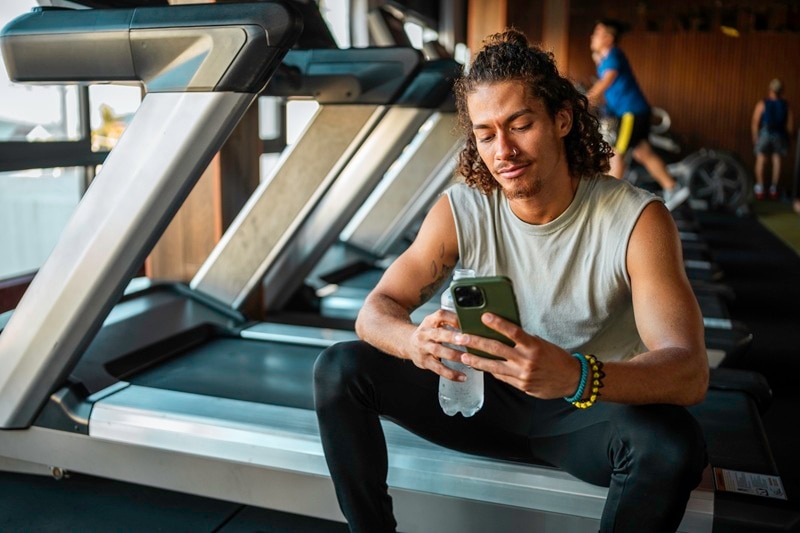
[vc_row][vc_column][vc_column_text]If you’re passionate about fitness, chances are, your social media algorithm is serving up exercise videos, post-workout smoothie recipes and Lululemon-clad influencers sharing their transformation photos and motivational wellness tips.
With intentional, mindful consumption, social media can help you create sustainable movement habits, but not all fitness content is beneficial. Some social media accounts might reinforce an unrealistic body image, promote restrictive diets, normalize compulsive exercise or encourage unhealthy comparison—all in the name of “discipline.”
How can you tell if the social media content you consume nurtures or harms your well-being? Here’s what to know about the link between these platforms and eating disorders and
disordered eating behaviors. The goal is to maintain a balanced, enjoyable relationship with fitness and your body.
The Connection Between Social Media and Eating Disorders
While social media itself is not inherently negative, how you interact with these platforms and what you consume on them can cause dangerous outcomes.
Those who seek physical validation through likes and comments, compare themselves to how someone else looks on their feed or internalize the sociocultural narrative that some bodies are “better” than others, are
more prone to eating disorder symptoms. So, what’s the connection?
Social media content is frequently optimized to show off curated visuals that reflect a narrow depiction of health. Take the trendy “fitspiration” hashtag, for instance. At face value, “fitspo” aims to increase exercise motivation, but it can actually have the opposite effect.
According to
this recent study, most fitspiration content on social media features images of thin women and muscular men, along with captions such as “be stronger than your excuses.” This leads to glamorization (and even sexualization) of certain bodies, as well as stigmatization of anyone outside those narrow ideals.
In fact, this content can
reduce the incentive to exercise because it often leaves folks with harmful messages about themselves, thus undermining their motivation. Case in point: the researchers found a correlation between fitspiration and beliefs such as:
- I am lazy.
- I am incapable.
- I am weak.
- I am ashamed.
- I am ugly.
- I am a failure.
- I am humiliated.
- I am jealous of others.
Another study found that 25 percent of social media users who view fitspiration content experience body dissatisfaction as a result. That’s because these visuals and captions often equate self-worth to external appearance.
Unfortunately, the research continues, many of these images are unattainable without resorting to extreme and unhealthy behaviors such as caloric restriction or compulsive exercise.
When Fitness Becomes an Eating Disorder Risk Factor
There’s no denying that exercise is beneficial for both physical and mental wellness. But where is the line between health-promoting and harmful? If you use movement as a tool to control your weight, earn your meals, punish yourself for eating certain foods, or attain a perceived beauty aesthetic, these behaviors could be signs of compulsive exercise.
This approach to fitness is a common predictor of anorexia and bulimia. In fact, those with an exercise compulsion are
more prone to carefully monitor or restrict their diets as well. Plus,
compulsive exercise is usually driven by perfectionism, self-criticism, unrealistic expectations, and feelings of inadequacy.
Some personality traits are more susceptible to compulsive exercise than others, but social media can reinforce—and often
reward—these tendencies, making them normal rather than a potential cause for concern, the research continues.
The “No Excuses” Mindset Is Harmful
Social media’s constant barrage of “no excuses” mantras, transformation challenges, intense workout reels and glorification of
diet culture can send the false (albeit persuasive) message that you need to put in more effort and achieve specific results.
This can lead to overtraining and injuries, combined with poor mental health outcomes such as anxiety, depression, emotional dysregulation, impulsivity, withdrawal, intrusive thoughts or sleep disturbances.
Sound familiar? Here are some indications that your fitness habits have become less about health and more about compulsivity:
- Treating exercise as punishment or compensation for eating.
- Skipping meals or restrict certain foods to control your weight.
- Not enjoying movement—your sole focus is on the results.
- Feeling anxious or ashamed if you miss a workout for any reason.
- Training through soreness, exhaustion and even sickness or injuries.
- Fixating on metrics such as calories burned, steps taken or miles run.
- Following influencers who discourage rest or reward pain as a mark of success.
- Comparing yourself to others online—even if you know their posts are curated.
- Feeling like a failure if your own appearance or workout routine does not reflect the fitness content you’re exposed to on social media.
How to Cultivate a Healthy Relationship with Social Media
The goal isn’t to demonize
all fitness content across social media platforms—it’s to consume with intention in a way that maintains well-being and minimizes harm. According to the
Cureus Journal, a “digital detox” (initiating boundaries or periodic breaks from social media use) can noticeably improve mental health. Below are a few strategies to help you with this.
Be mindful of your feed
Mute content and unfollow accounts that make you feel anxious, obsessive or inadequate with regard to your appearance and exercise habits. Instead, follow diverse wellness professionals who share body-neutral content, reinforce self-care and encourage flexible approaches to health and fitness. Look for accounts like
@NopeThatsNotNormal or
@bodypositivefitness_ that feature and are run by body-neutral advocates.
Practice social media literacy
Remember that what you see on social media is often not a realistic depiction. Some influencers might edit posts to manufacture a certain aesthetic, while others might promote extreme transformation challenges or unverified nutrition hacks that can result in overtraining and underfueling. Critically evaluate this content to determine whether it’s accurate, safe and beneficial.
Moderate your screen time
Reducing your social media consumption by 50 percent for two weeks can lead to a healthier body image, reports the
American Psychological Association. If your current scrolling habits cause you to feel insecure or critical of your appearance, set daily screen limits or remove the apps from your mobile device. This will cut down on comparison and motivate you to spend more time offline.
Focus on how exercise feels
Shift your fitness goals from surface-level (e.g. I want to fix this “problem area”) to objectives that center on function and enjoyment. Notice how it
feels to move—each muscle contraction and physical sensation—rather than fixating on how you look.
Enjoyment is a main predictor of exercise adherence. So, have fun and let the results come secondary.
Prioritize rest and recovery
Rest is not a sign of laziness or weakness—it’s essential for your health. Social media accounts that neglect post-workout recovery, scoff at the concept of rest days, or normalize exercising in the midst of sickness, exhaustion and injuries do not have your best interest in mind. Your muscle fibers and bone tissues need time to adapt, strengthen and repair after each training session.
Seek out available resources
If your thoughts and behaviors around fitness, nutrition or body image feel too difficult to process on your own, there’s no shame in asking for help. Working with a coach or a therapist is a great way to better understand what you’re feeling. Check out
these podcasts too, which feature voices, stories and insights from experts in the disordered eating and eating disorder space.
Bottom Line: Social Media Is a Tool—Use It Wisely
Social media
can be part of your fitness journey, but it should be used with intention. Use these platforms as tools for education, inspiration and support, not obsessive comparison and self-criticism. Your well-being matters more than a narrow beauty ideal. Be thoughtful about what you consume and focus on the joy of movement most of all.[/vc_column_text][/vc_column][/vc_row][vc_row][vc_column][vc_text_separator title="Featured Products" border_width="2"][vc_row_inner equal_height="yes" content_placement="middle" gap="35"][vc_column_inner width="1/3"][vc_single_image image="186623" img_size="full" alignment="center" onclick="custom_link" img_link_target="_blank" css=".vc_custom_1753385363126{padding-right: 7% !important;padding-left: 7% !important;}" link="https://www.vitacost.com/kates-real-food-organic-protein-bar-peanut-butter-brownie"][/vc_column_inner][vc_column_inner width="1/3"][vc_single_image image="186622" img_size="full" alignment="center" onclick="custom_link" img_link_target="_blank" css=".vc_custom_1753385373846{padding-right: 7% !important;padding-left: 7% !important;}" link="https://www.vitacost.com/kashi-go-protein-fiber-cereal-honey-almond-flax-crunch"][/vc_column_inner][vc_column_inner width="1/3"][vc_single_image image="186621" img_size="full" alignment="center" onclick="custom_link" img_link_target="_blank" css=".vc_custom_1753385384915{padding-right: 7% !important;padding-left: 7% !important;}" link="https://www.vitacost.com/aloha-organic-plant-based-protein-bars-minis"][/vc_column_inner][/vc_row_inner][/vc_column][/vc_row]