



 Caitlin Hoff, a health investigator at ConsumerSafety.org, points out that a calorie is a measurable unit of food energy, but that not all calories are equal when it comes to nutrition.
“If your health coach told you to eat only 1,200 calories a day without any other limitations, you could easily eat 1,200 calories of candy corn or potato chips,” Hoff says. “You would also be incredibly hungry for the rest of your day and malnourished, lacking necessary nutrients, proteins and healthy fats. Knowing the calories in your food and potentially eating fewer calories does not guarantee health.”
Along those lines, chef Melissa Eboli, a nutrition and wellness counselor, says some foods like nuts and seeds are high in calories but also high in nutritional value.
Weight loss therapist Candice Seti adds that a lower-calorie item might not be a healthier item. For instance, a 400-calorie cupcake loaded with sugar and preservatives is less beneficial than a 600-calorie dish chockfull of avocado, black beans and other “real food.”
The federal Affordable Care Act, otherwise known as Obamacare, at some point will require restaurant chains to list a calorie count for each menu item. Some restaurants already comply with the law. The calorie-counting rule also will be mandated for certain grocery stores, convenience stores, gas stations, movie theaters and sports stadiums that sell prepared food.
In May, the U.S. Food and Drug Administration delayed compliance with the calorie-counting requirement until May 2018.
U.S. Health and Human Services Secretary Tom Price has complained that the calorie-counting rule, as it’s written now, is “unwise and unhelpful” and should be “more flexible and less burdensome.”
In the meantime, Americans continue to debate the merits of slapping calorie counts on menus.
Liza Baker, a health and kitchen coach, says she urges her clients to ignore calorie counts — or at least discount their importance.
Instead, she recommends focusing on the origin of the calories that you consume. For instance, are you getting them from whole grains, lean proteins, fruits and vegetables, or from white rice, potatoes and fried foods?
“Although total calories is important, it is the balance of protein, carbohydrate and fat in those calories that is even more important, as it determines the hormonal response from that meal,” says Barry Sears, author of the “Zone Diet” book series and president of the Inflammation Research Foundation.
Eboli does put some stock in calorie counts, though. She says they raise nutritional awareness among consumers, perhaps prompting some of them to skip calorie-laden muffins or deceivingly unhealthy salads in favor of healthier alternatives.
Registered dietitian Jennifer Bowers says: “I love having the data at my fingertips. Knowledge is power! Calorie amounts on menus give me the data I need to make an informed decision. It helps me manage my daily nutrition budget, so to speak.”
For her part, Hoff, the ConsumerSafety.org health investigator, wonders how much consumers actually will pay attention to calorie counts on menus. The calorie-counting rule aims to guide Americans toward smarter food options, she says, but “if people skim the menu ignoring these numbers, then what good is it doing to reduce obesity and encourage healthy choices?”
On top of that, Hoff says, calorie counts on restaurant menus can be off track. Even at the same fast-food joint, one small bag of fries may not have the same number of calories as the small bag of fries right next to it, she says.
“The differing lengths of the fries and the number of fries in each bag make reporting an exact calorie count for your particular bag impossible,” Hoff says.
Further complicating matters is that switching salad dressings, changing up condiments or swapping side dishes can throw off the calorie count for a menu item, she says.
“Many people don’t take these variables into consideration when ordering their meal,” Hoff says, “even when the calorie count is a priority to them.”
Nonetheless, Hoff acknowledges the calorie-counting rule isn’t “all bad.” Consumers will make better food choices once the rule takes effect, she says, and some restaurants might introduce healthier menu options as consumers become more calorie-conscious.
“The positive side of calorie counts on menus is that it does often shock people to learn that what they’ve been typically eating is significantly higher in calories than they would have guessed,” says Seti, the weight loss therapist. “This can often cause people make a change to a healthier option.”
Caitlin Hoff, a health investigator at ConsumerSafety.org, points out that a calorie is a measurable unit of food energy, but that not all calories are equal when it comes to nutrition.
“If your health coach told you to eat only 1,200 calories a day without any other limitations, you could easily eat 1,200 calories of candy corn or potato chips,” Hoff says. “You would also be incredibly hungry for the rest of your day and malnourished, lacking necessary nutrients, proteins and healthy fats. Knowing the calories in your food and potentially eating fewer calories does not guarantee health.”
Along those lines, chef Melissa Eboli, a nutrition and wellness counselor, says some foods like nuts and seeds are high in calories but also high in nutritional value.
Weight loss therapist Candice Seti adds that a lower-calorie item might not be a healthier item. For instance, a 400-calorie cupcake loaded with sugar and preservatives is less beneficial than a 600-calorie dish chockfull of avocado, black beans and other “real food.”
The federal Affordable Care Act, otherwise known as Obamacare, at some point will require restaurant chains to list a calorie count for each menu item. Some restaurants already comply with the law. The calorie-counting rule also will be mandated for certain grocery stores, convenience stores, gas stations, movie theaters and sports stadiums that sell prepared food.
In May, the U.S. Food and Drug Administration delayed compliance with the calorie-counting requirement until May 2018.
U.S. Health and Human Services Secretary Tom Price has complained that the calorie-counting rule, as it’s written now, is “unwise and unhelpful” and should be “more flexible and less burdensome.”
In the meantime, Americans continue to debate the merits of slapping calorie counts on menus.
Liza Baker, a health and kitchen coach, says she urges her clients to ignore calorie counts — or at least discount their importance.
Instead, she recommends focusing on the origin of the calories that you consume. For instance, are you getting them from whole grains, lean proteins, fruits and vegetables, or from white rice, potatoes and fried foods?
“Although total calories is important, it is the balance of protein, carbohydrate and fat in those calories that is even more important, as it determines the hormonal response from that meal,” says Barry Sears, author of the “Zone Diet” book series and president of the Inflammation Research Foundation.
Eboli does put some stock in calorie counts, though. She says they raise nutritional awareness among consumers, perhaps prompting some of them to skip calorie-laden muffins or deceivingly unhealthy salads in favor of healthier alternatives.
Registered dietitian Jennifer Bowers says: “I love having the data at my fingertips. Knowledge is power! Calorie amounts on menus give me the data I need to make an informed decision. It helps me manage my daily nutrition budget, so to speak.”
For her part, Hoff, the ConsumerSafety.org health investigator, wonders how much consumers actually will pay attention to calorie counts on menus. The calorie-counting rule aims to guide Americans toward smarter food options, she says, but “if people skim the menu ignoring these numbers, then what good is it doing to reduce obesity and encourage healthy choices?”
On top of that, Hoff says, calorie counts on restaurant menus can be off track. Even at the same fast-food joint, one small bag of fries may not have the same number of calories as the small bag of fries right next to it, she says.
“The differing lengths of the fries and the number of fries in each bag make reporting an exact calorie count for your particular bag impossible,” Hoff says.
Further complicating matters is that switching salad dressings, changing up condiments or swapping side dishes can throw off the calorie count for a menu item, she says.
“Many people don’t take these variables into consideration when ordering their meal,” Hoff says, “even when the calorie count is a priority to them.”
Nonetheless, Hoff acknowledges the calorie-counting rule isn’t “all bad.” Consumers will make better food choices once the rule takes effect, she says, and some restaurants might introduce healthier menu options as consumers become more calorie-conscious.
“The positive side of calorie counts on menus is that it does often shock people to learn that what they’ve been typically eating is significantly higher in calories than they would have guessed,” says Seti, the weight loss therapist. “This can often cause people make a change to a healthier option.”
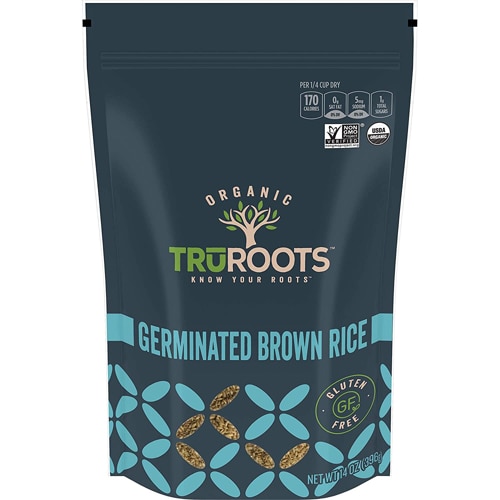
TruRoots Organic Non-GMO Gluten Free Germinated Brown Rice Description
-
Non-GMO Project Verified
-
USDA Organic
-
Gluten Free
-
170 Calories per Serving
-
0g Sat Fat per Serving
-
5mg Sodium per Serving
-
1g Total Sugars
Experience an abundance of delicious flavor with this ancient ingredient sourced from nature.
At TruRoots® we believe in truly knowing the food you bring to the table. That's why we nurture strong relationships with farmers who share our commitment to sustainability and high quality, organic foods - so you can have confidence your family is eating the truest of nature's goodness.
Directions
-
Combine: 1 cup germinated brown rice with 2 cups water or broth in a medium pot. Add 1 tablespoon oil or butter, if desired.
-
Cook: Bring to a boil, stirring occasionally. Cover and simmer over low heat 20 to 25 minutes, until germinated brown rice is tender and liquid is absorbed.
-
Finish: Remove from heat and let stand, covered, for 10 minutes. Fluff with fork.
Makes about 3½ cups. Do not eat raw. Fully cook before eating.
Free Of
GMOs, gluten.
*These statements have not been evaluated by the Food and Drug Administration. This product is not intended to diagnose, treat, cure, or prevent any disease.
Supplement Facts
Serving Size: 1/4 Cup Dry (45 g)
Servings per Container: About 9
| Amount Per Serving | % Daily Value | |
| Calories | 170 | |
| Total Fat | 1.5 g | 2% |
| Saturated Fat | 0 g | 0% |
| Trans Fat | 0 g | * |
| Cholesterol | 0 mg | 0% |
| Sodium | 5 mg | 0% |
| Total Carbohydrate | 36 g | 13% |
| Dietary Fiber | 2 g | 6% |
| Total Sugars | 1 g | |
| Includes 0g Added Sugars | 0% | |
| Protein | 3 g | * |
| Vitamin D | 0 mcg | 0% |
| Calcium | 5 mg | 0% |
| Iron | 0 mg | 0% |
| Potassium | 126 mg | 2% |
*Daily value not established.
Other Ingredients: Organic germinated brown rice.
The product you receive may contain additional details or differ from what is shown on this page, or the product may have additional information revealed by partially peeling back the label. We recommend you reference the complete information included with your product before consumption and do not rely solely on the details shown on this page. For more information, please see our full disclaimer.
