


skip to main content

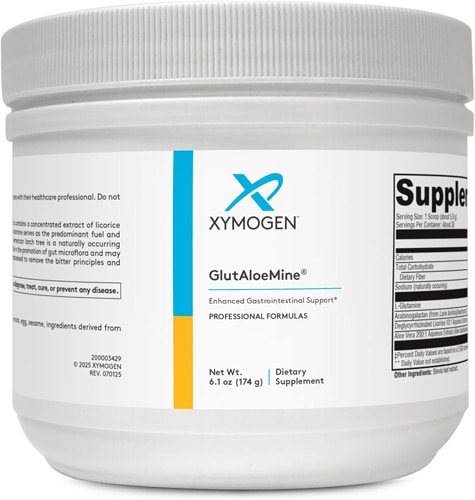
XYMOGEN GlutAloeMine -- 30 Servings


XYMOGEN GlutAloeMine
  • Our price: $60.99

    $2.04 per serving


  • +

Added to My List as a guest.

Your guest list will be saved temporarily during your shopping session.

Sign in to add items to your saved list(s).

1 item added to your list

XYMOGEN GlutAloeMine -- 30 Servings

Oops! Something went wrong and we were unable to process your request. Please try again.

  • Guaranteed Authentic

    100% Authentic

    • ✓ Products sourced directly from brands or authorized distributors
    • ✓ No third-party resellers
    • ✓ Products stored and shipped in conditions that ensure quality
    • ✓ Vitacost is 100% committed to your well-being and safety

XYMOGEN GlutAloeMine Description

  • Enhanced Gastrointestinal Support
  • L-Glutamine Fuels Cells of your Gut Lining and Helps Repair Tissue
  • Contains DGL (Deglycyrrhizinated Licorice) To Soothe and Protect
  • Includes Aloe Vera Processed for Gentle, Gut-Calming Support
  • Provides Arabinogalactan, a Prebiotic Fiber that Promotes Good Gut Bacteria and Short-Chain Fatty Acid Production
  • Professional Formulas

GI Support With L-Glutamine, Aloe Vera, and Gut-Soothing Botanicals


Your gut is more than a digestive organ—it’s a frontline defender of your immune system and a hub of nutrient absorption. When your gastrointestinal (GI) lining is stressed, everything from digestion to immunity can suffer. GlutAloeMine® is a focused gut health supplement designed to support the structural integrity and comfort of the GI tract, especially when stress, food sensitivities, or other irritants compromise its function.


This formula features L-glutamine, the most abundant amino acid in the body and the primary fuel source for the cells that line your gut. It helps strengthen the intestinal barrier and support healthy tissue repair, which is key for those experiencing occasional common digestive issues.


It also includes arabinogalactan, a prebiotic fiber from North American larch trees that helps nourish beneficial gut bacteria and may enhance the production of short-chain fatty acids. These compounds soothe and stabilize the gut lining.


Aloe vera leaf extract, processed to remove bitter laxative compounds, adds a gentle, cooling layer of support, and deglycyrrhizinated licorice (DGL) helps calm the stomach and promote mucus production to protect the gut lining.


If you’re seeking L-glutamine for gut health or a natural formula to support digestion and recovery from GI distress, GlutAloeMine® brings science-backed ingredients together to help restore balance from the inside out.


Directions

Mix one scoop in 2-4 oz water once daily, or as directed by your healthcare professional.
Free Of
Animal products, dairy, egg, fish, gluten, GMOs, peanuts, sesame, shellfish, soy, tree nuts, wheat, and yeast.

*These statements have not been evaluated by the Food and Drug Administration. This product is not intended to diagnose, treat, cure, or prevent any disease.


Supplement Facts
Serving Size: 1 Scoop (About 5.8 g)
Servings per Container: About 30
Amount Per Serving% Daily Value
Calories5
Total Carbohydrate2 g1%
   Dietary Fiber1 g4%
Sodium (naturally occurring)5 mg<1%
L-Glutamine3 g*
Arabinogalactan (from Larix laricina) (heartwood)2 g*
Deglycyrrhizinated Licorice 10:1 Aqueous Extract (Glycyrrhiza glabra) (root)500 mg*
Aloe Vera 200:1 Aqueous Extract (Aloe barbadensis) leaf gel)100 mg*
*Daily value not established.
Other Ingredients: Stevia leaf extract.
Warnings

Consult your healthcare professional prior to use. Individuals taking medication should discuss potential interactions with their healthcare professional.

The product you receive may contain additional details or differ from what is shown on this page, or the product may have additional information revealed by partially peeling back the label. We recommend you reference the complete information included with your product before consumption and do not rely solely on the details shown on this page. For more information, please see our full disclaimer.

View printable version Print Page

What Is Oxidative Stress? Taking Control of Cellular Health - and Your Longevity

[vc_row][vc_column][vc_column_text]Is oxidative stress just another buzz word or something worth paying attention to? This biochemical reaction is both normal and natural to a certain extent, but if it overwhelms the body, harmful issues can start to take root. Continue reading to better understand the causes of oxidative stress, how it could affect your health and which measures you can take to restore oxidative balance.

Concept of What is Oxidative Stress Represented by Fit Woman Stopping to Sip From Water Bottle on Dusk-Time Run

What is oxidative stress?

The Biomedicines Journal defines oxidative stress as an imbalance between the cellular formation and elimination of unstable free radical molecules called reactive oxygen species (ROS) and reactive nitrogen species (RNS). When these free radicals accumulate too quickly, the stable cells can’t effectively neutralize them. Over time, this could increase the risk of low immune function, chronic inflammation, wound healing impairment, cardiovascular issues, metabolic syndrome, arthritis, nervous system stress, diabetes or cancer. Not all free radicals cause problems. The human body contains over 60 trillion cells, some of which are free radicals, according to the International Journal of Molecular Sciences. When there’s a normal amount of them, free radical cells work with antioxidant cells to maintain homeostasis, or balance. In excess, however, free radicals can attack the mitochondria of other cells, often leading to inflammation, infection and ultimately chronic disease progression.

What causes oxidative stress?

Many risk factors can contribute to oxidative stress. Some are related to lifestyle, and others are more genetic or environmental. But once you know the causes, it’s easier to make healthy shifts. While not an exhaustive list, here are a few of the main causes of oxidative stress:

Aging

As we get older, the body naturally produces more free radicals. Over time, these unstable molecules can cause cumulative damage to cells. When oxidative stress outpaces the body’s ability to repair itself, it can accelerate the aging process and increase the risk of age-related conditions appearing earlier.

Diet

What you eat plays a major role in managing oxidative stress. Diets rich in antioxidants—found in vibrant fruits and vegetables, nuts, seeds and herbs—help the body neutralize free radicals and maintain a healthier internal balance.

Environmental exposures

Everyday exposures to pollutants and chemicals—present in air, water, ultra-processed foods, alcohol and many personal care and household products—place stress on the body. While the body works to detoxify and repair this damage, the process itself can generate free radicals, contributing to oxidative stress.

Excessive UV exposure

Too much unprotected sun exposure increases oxidative damage in the skin. This can lead to visible effects like sunburn, dark spots and premature skin aging and over time may raise the risk of skin cancer.

How oxidative stress connects to fitness

Oxidative stress and fitness have a nuanced relationship. Exercise naturally increases ROS production through muscle contractions that strain the mitochondria of your musculoskeletal cells, according to the Journal of Sport and Health Science. Oxidative stress causes muscle fiber tears and accelerates metabolism, which promotes both endurance and strength adaptations. Strenuous workouts, in particular, intensify oxidative stress because these exercises stimulate the onset of muscle fatigue. In the short-term, oxidative stress due to fitness performance is normal, beneficial even. But it should be a temporary reaction that wears off through recovery and muscle repair. The problem occurs when oxidative stress transitions from acute to chronic. When you don’t exercise enough or overtrain without an adequate recovery time, the adaptive muscular gains associated with acute oxidative stress can turn into chronic inflammation. While most fitness routines don’t reach a degree of intensity where this could become a legitimate risk, it’s still crucial to prioritize recovery after each workout. It’s also important to maintain consistency. Research in the Biology Journal shows that high fitness levels lead to more antioxidant capacity and resistance to the prolonged effects of oxidative stress.

How to promote oxidative balance through exercise

How can you exercise in a way that restores oxidative balance? These simple but effective strategies will make it easier to maximize all the benefits of your workout routine, while minimizing the risk of chronic oxidative stress and potential damage to your health.

Increase your fitness routine gradually.

Increase the duration and exertion level of your workouts over multiple weeks. The cardiorespiratory and musculoskeletal systems need time to adapt so they can sustain both the endurance and stamina required. You can aim for about 150–300 minutes (2.5–5 hours) of moderate exercise per week, but start with what feels manageable and increase as you’re physically able while still prioritizing rest.

Focus on a combination of exercises.

You need both aerobic and resistance training to see the full benefits of antioxidant capacity. At least two to three fitness sessions per week should incorporate resistance training, even if it’s just with your own bodyweight.

Offset intensity with adequate recovery.

Resting after each workout (especially when it’s strenuous) reduces inflammation, while boosting muscular adaptation, antioxidant capacity, and tolerance to effort. So don’t overlook the importance of recovery. It’s a powerful defense against the threat of chronic oxidative stress.

Listen to the needs of your own body.

Tune in and examine how you feel over 12–24 hours after each workout. Are you energized or abnormally fatigued? Do you notice prolonged soreness or stiffness? Signs of potential inflammation or lack of muscle repair might be a sign that you need to make temporary adjustments, whether that’s reducing the load, slowing the pace, or shortening the duration.

Oxidative stress doesn’t have to derail your wellness

At its core, oxidative stress is a biological process, but chronic oxidative stress can lead to cellular damage, inflammation and, eventually, disease. With the right fitness routine, however, you can help mitigate the effects of oxidative stress and nurture a body that’s strong, balanced, resilient and healthy.[/vc_column_text][/vc_column][/vc_row][vc_row][vc_column][vc_text_separator title="Featured Products" border_width="2"][vc_row_inner equal_height="yes" content_placement="middle" gap="35"][vc_column_inner width="1/3"][vc_single_image image="191388" img_size="full" alignment="center" onclick="custom_link" img_link_target="_blank" css=".vc_custom_1766608318650{padding-right: 7% !important;padding-left: 7% !important;}" link="https://www.vitacost.com/force-factor-nad-longevity-complex"][/vc_column_inner][vc_column_inner width="1/3"][vc_single_image image="191387" img_size="full" alignment="center" onclick="custom_link" img_link_target="_blank" css=".vc_custom_1766608339655{padding-right: 7% !important;padding-left: 7% !important;}" link="https://www.vitacost.com/now-super-antioxidants"][/vc_column_inner][vc_column_inner width="1/3"][vc_single_image image="191386" img_size="full" alignment="center" onclick="custom_link" img_link_target="_blank" css=".vc_custom_1766608354062{padding-right: 7% !important;padding-left: 7% !important;}" link="https://www.vitacost.com/life-extension-geroprotect-ageless-cell"][/vc_column_inner][/vc_row_inner][/vc_column][/vc_row]
Please enter a valid zip code
LVDC16