[vc_row][vc_column][vc_column_text]The color of a food is likely one of the first things you notice before you even take a bite. People are naturally drawn to colorful foods, which makes fruits and vegetables a desirable choice. The varying natural colors of fruits and vegetables can signify different health benefits which are caused by the plant pigments they contain.
Here we’ll take a closer look at purple foods, including what they are and what makes them so special.
Purple Fruits and Vegetables: What Creates the Purple Pigment?
Naturally purple foods get their vibrant color from a plant pigment called
anthocyanins. These pigments act as antioxidants in your body.
Antioxidants are compounds that help protect your body’s cells by fighting against free radicals — or unstable molecules that can cause damage. When too many free radicals build up in your body, a condition called oxidative stress develops. This can lead to various diseases such as heart disease, diabetes and some cancers.
So, choosing purple foods is actually an essential part of staying healthy. In fact, research has shown that people who eat more anthocyanin-rich foods have a lower risk of developing the above-mentioned diseases as well as obesity and brain disorders.
Anthocyanin pigments can also be extracted from purple foods and used as a natural food dye. This creates a healthier alternative to artificial food colorings, which carry many
potential risks such as increased risk of cancer, hyperactivity and behavioral issues especially in children.
What Are the Purple Foods?
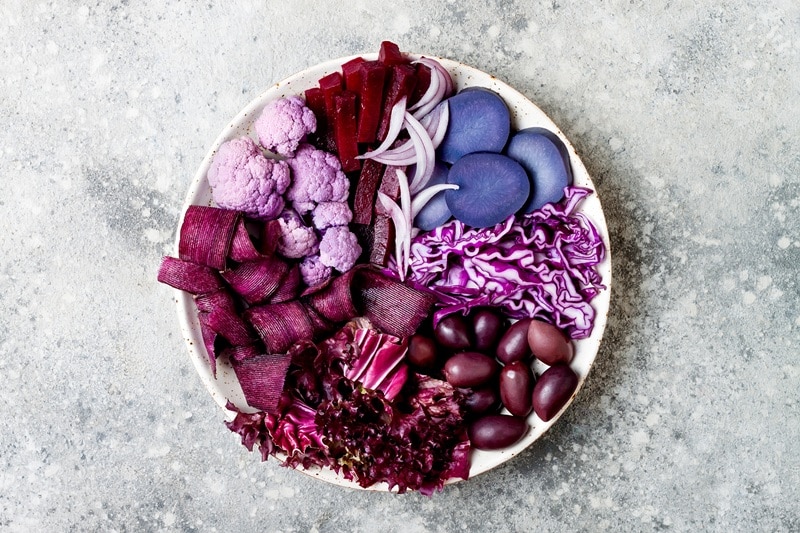
Contrary to their title, purple foods aren’t always purple in appearance. Anthocyanins are responsible for the colors red, blue and purple, but they can all be classified as “purple foods.” Foods that are naturally purple are most often either a fruit or vegetable.
Examples of purple foods include:
Plums
Plums are one of the most obvious purple foods thanks to their deep purple flesh. Research has reported that eating plums is associated with improved brain function,
bone health and cardiovascular risk factors.
Purple sweet potatoes
Sweet potatoes are best known for being orange, which contain a different type of plant pigment called beta carotene. Yet there is also a purple variety, which can be used interchangeably with the orange variety. Sweet potatoes are a great source of vitamin C, which also serves as an antioxidant in addition to anthocyanins. They also provide a good amount of vitamin A, which supports healthy eyes and potassium, which supports normal blood pressure and more.
Purple carrots
Carrots are another veggie that are commonly orange but can also come in white, yellow and purple. Carrots provide another good source of vitamin A as well as fiber, providing almost
4 grams per one cup chopped carrots. This fiber
supports healthy blood sugar levels and gastrointestinal function.
Purple cabbage — also called red cabbage
Cabbage is considered a cruciferous vegetable along with others like broccoli, brussels sprouts and cauliflower. Cruciferous vegetables have been found to have potent
anti-cancer properties.
Red cabbage is also an excellent source of vitamin C, providing
56% of your daily needs in one cup chopped.
Red onions
These onions have a purple hue but are usually referred to as “red”. Onions contain a plant compound called quercetin. Quercetin has antioxidant and anti-inflammatory properties, and
research shows it can help prevent and manage numerous health conditions including cancer, diabetes and obesity.
Purple grapes — sometimes called red grapes
The main difference between red and green grapes is the plant pigments they contain. Like the other purple foods, these grapes are a good source of anthocyanins. The antioxidants in grapes can help
lower blood pressure and protect overall heart health.
Passionfruit
Unlike some fruits, the seeds and juice are the part you eat in a passionfruit, which are covered in a tart, yellowish juice and enclosed by a purple flesh. Passionfruit has the highest fiber content of any other fruit, providing
24 g per cup or 88% of your daily recommended intake. This is 3 to 4 times more fiber than most other fruits. In addition to gut health and blood sugar control, fiber helps lower cholesterol and promote a feeling of fullness that can lead to weight loss and/or appetite control.
Beetroot
Beetroot and the juice it contains is naturally high in compounds called nitrates, which get converted into nitric oxide in your body. These compounds help improve blood flow in your body and can help
lower blood pressure as well as
improve athletic performance.
Blueberries
Blueberries are one of the top antioxidant-rich foods in the world.
Studies have reported that eating blueberries comes with numerous benefits such as improved brain function, gut health, heart health, and more.
Elderberries
While it is unsafe to consume raw elderberries, you can enjoy cooked elderberries as a jam or
homemade syrup. Elderberry is also commonly used as a supplement for immune support.
Research shows that elderberry may reduce the length and severity of the common cold, and may also reduce the duration of the flu, but more evidence is needed to confirm.
In addition, other purple foods with health benefits include:
- Ube (purple yam)
- Eggplant
- Blackcurrants
- Blackberries
- Acai berries
In Summary
Anthocyanins are the plant compounds that make purple foods purple in color. They serve as a powerful antioxidant, which gives purple foods a slew of health benefits such as supporting heart health, improving gut function, and even helping prevent some cancers. Since there are many different purple foods to choose from, it can be simple to include a variety of them into your diet.[/vc_column_text][/vc_column][/vc_row][vc_row][vc_column][vc_text_separator title="Featured Products" border_width="2"][vc_row_inner equal_height="yes" content_placement="middle" gap="35"][vc_column_inner width="1/3"][vc_single_image image="189110" img_size="full" alignment="center" onclick="custom_link" img_link_target="_blank" css=".vc_custom_1760997900453{padding-right: 7% !important;padding-left: 7% !important;}" link="https://www.vitacost.com/terra-gluten-free-real-vegetable-chips-blues"][/vc_column_inner][vc_column_inner width="1/3"][vc_single_image image="189109" img_size="full" alignment="center" onclick="custom_link" img_link_target="_blank" css=".vc_custom_1760997913517{padding-right: 7% !important;padding-left: 7% !important;}" link="https://www.vitacost.com/simple-truth-purple-popcorn-kernels"][/vc_column_inner][vc_column_inner width="1/3"][vc_single_image image="189107" img_size="full" alignment="center" onclick="custom_link" img_link_target="_blank" css=".vc_custom_1760997924168{padding-right: 7% !important;padding-left: 7% !important;}" link="https://www.vitacost.com/living-intentions-organic-activated-superfood-cereal"][/vc_column_inner][/vc_row_inner][/vc_column][/vc_row]